
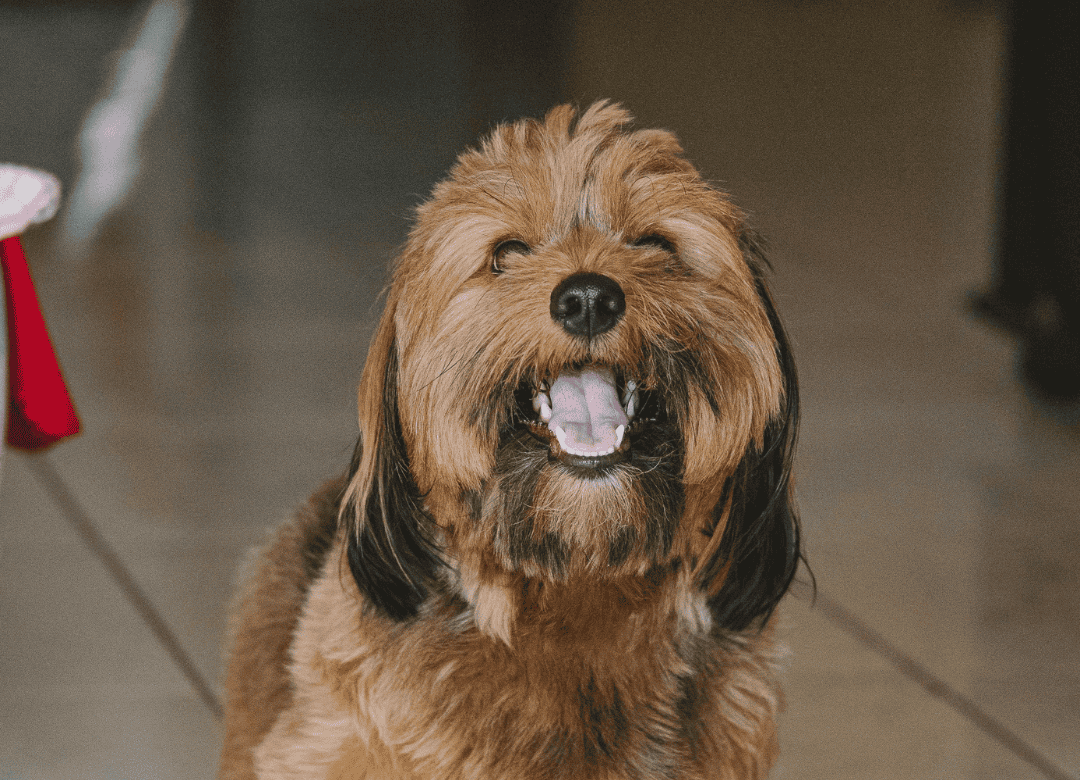

You just finished dinner and settle in to do some mindless scrolling while watching a movie. But then your dog jumps on your leg, panting.
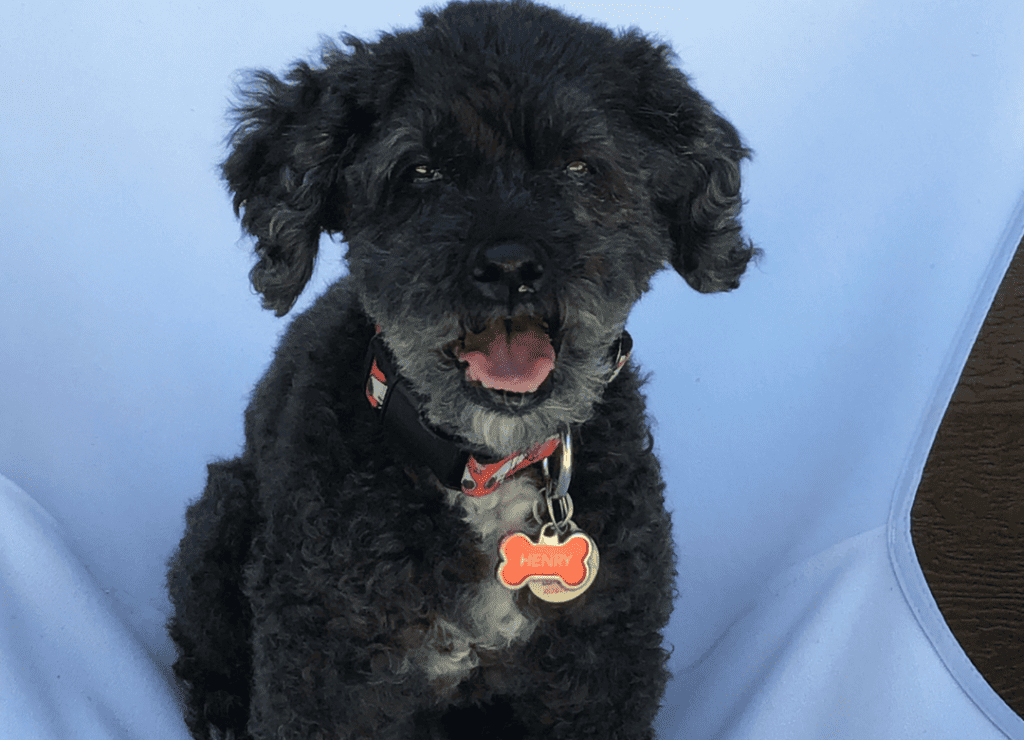
A dog panting at night can set off alarms for pet parents. But it may be normal behavior. My dog Henry pants at night occasionally. But now that I know why, I can help him overcome it. I also know when his panting means I need to contact his vet and when it means I can handle it at home.
This article will give you this confidence. You’ll know why your dog pants at night, how to help your pup, and when the panting means you need to talk to your vet.
📌 PIN FOR LATER!
As an Amazon Associate, I earn from qualifying purchases. I get commissions for purchases made through some links in this article. Learn more here.
Budget Tip: It doesn’t cost much to adjust your thermostat a notch, or to put your pup’s cooling vest on your buddy, or to even give your dog a comfy place to rest. But knowing your dog is well and being proactive when necessary can help to keep your vet bills down and your pup healthy.
What Normal Dog Panting Looks Like
Dogs do not sweat the way people sweat. Panting is the primary way your dog moves heat out of their body. Panting is a sign your dog’s cooling system is working.
Normal panting has a very certain look.
Short panting period > settling down within minutes > breathing back to normal
But when your dog’s panting continues, or when panting begins when you don’t notice any changes in your environment, it deserves a closer look.
Figuring out your dog’s normal breathing rate is a good idea. It will tell you when your dog has returned to a normal state or when you need to worry. VCA has a great breakdown on how to determine your dog’s normal rate.
8 Reasons For Dog Panting At Night
1. The room is warmer than you realize
This is the most common cause, and the easiest one to test.
Heat rises, bedrooms hold warmth, and thermostats run on schedules that were set for people, not furry friends. Winter heating does this as reliably as a summer evening.
Room corners and the floor can hold warm air, which is right at your dog’s height.
I’ve even noticed Henry panting when I’ve had the oven on a lot on a cold day. This is when I put on his cooling vest for 10-15 minutes or until his panting stops. Or if the kitchen is hot for me as well, I’ll even turn on a stand fan to push the hot air throughout the house.
2. A late burst of activity
An evening walk, a game of fetch, or a round of zoomies can all leave your dog panting well after the fun ends.
Henry will often sprint around the property in the evening and then come inside and pant for several minutes. He drinks water, looks at me to see if there’s more fun, and when he has decided that was it for a while, he curls up in his bed.
The timing is everything. If the panting decreases within 10-15 minutes after the excitement, then the panting is most likely due to the activity.
3. Anxiety or something outside
Dogs hear far more at night than people. Wildlife, weather, a neighbor’s car, or evening laundry noises can all cause your dog to pant anxiously.
When the coyotes start a howling tryout in the yard, Henry gets anxious and pants. Turning on his heartbeat toy and giving him a calm cookie helps him settle down to his normal state.
You’ll know the panting is related to anxiety because a stressed dog will generally also pace, whine, and have an inability to settle down in one spot.
4. Pain, especially in older dogs
Pain can cause a dog to pant. It’s one of those things that dog parents can easily overlook. When you see your dog moving about their day normally, pain doesn’t pop into your mind.
But if your dog is mostly inactive during the day, joints can get stiff. Even if your dog seems comfortable on a walk, your buddy can be uncomfortable at midnight after lying in bed for a few hours.
I have several comfy beds for Henry’s sore joints. He also gets a massage daily, which helps loosen his joints. Here are more home care ideas for dog arthritis.
Pain might be the reason for your dog’s panting if your pup is constantly shifting positions, getting up, lying back down, and then repeating the process again and again.
5. Age-related changes in senior dogs
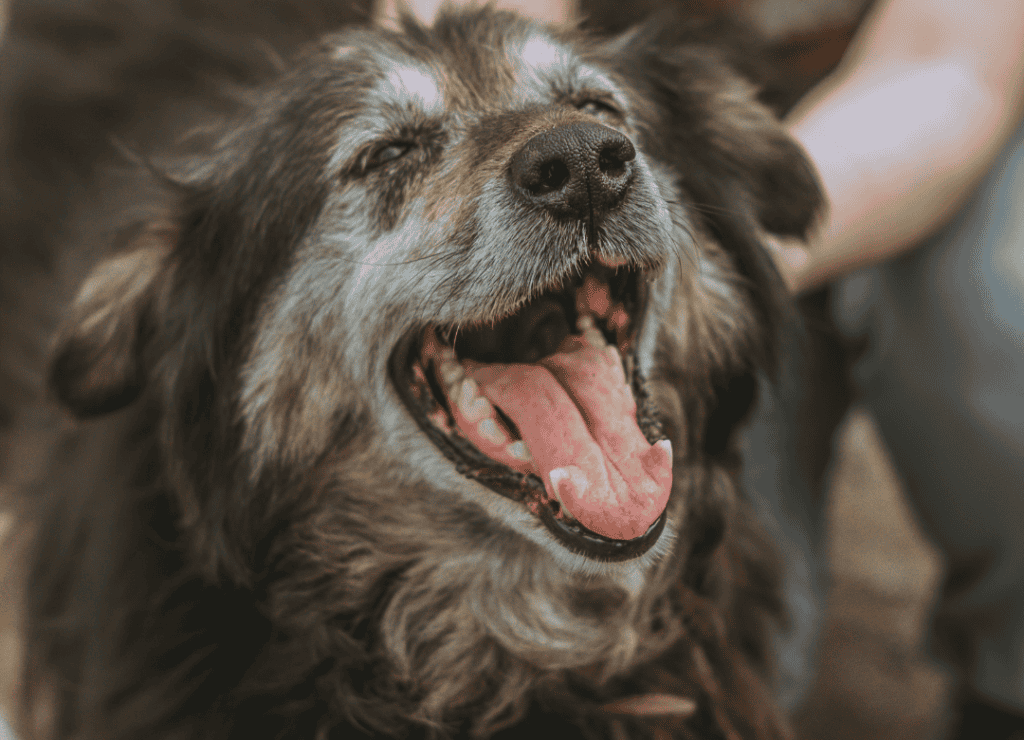
Older dogs can become restless at night. Often, panting is accompanied by pacing in senior dogs.
It can help to keep your dog’s bed, floor items, and nightly routine consistent.
If your senior buddy seems confused, especially in the evening, it’s worth mentioning at the next vet visit.
6. Medication side effects
Several common prescriptions can increase panting. The side effect of panting often shows up strongest when a dog is settling down for the evening.
If panting started within a few weeks of a new medication, then it might be a side effect of the drug. Make sure to mention it to your vet.
7. Breed, coat, and body condition
A few breed and body types to keep in mind are:
- Flat-faced dogs, like pugs and Frenchies, move air less efficiently, so panting does less cooling work for them.
- Heavy-coated dogs, like Huskies, Newfoundlands, and German Shepherds, hold warmth longer than thin-coated dogs.
- Dogs with extra weight can generate more heat, retain it longer, and shed it more slowly.
None of these types of dogs is a problem on its own. But knowing your dog’s type and what’s normal for your pup can help explain night panting.
8. Medical condition
A small number of nighttime dog panting cases can be related to a health condition.
Never guess about your dog’s health.
The following section covers the signals you’ll see when you should call your vet, and when it’s fine to take a wait-and-see approach.
Relaxed Panting vs. Panting That Needs Attention
| Relaxed panting (wait-and-see) | Panting that needs attention (talk with your vet) |
| Body stays loose, soft eyes | Body tense, eyes wide, ears pinned |
| Tapers off within ten to fifteen minutes | Holds steady, or gets heavier over time |
| Dog settles down quickly and stays settled | Dog gets up, paces, resettles again and again |
| Tongue relaxed, normal pink color of gums and tongue | Tongue or gums look pale, gray, or bluish |
| Started after obvious heat or activity | Started with no clear trigger |
| Quiet breathing | Raspy, wheezy, or noticeably loud breathing |
Panting that sounds different is more of an urgent issue than panting that just lasts longer.
What To Check Tonight
You can easily do these five things in a minute and make your dog more comfortable tonight.
- Room temperature at dog height. Put your hand on the floor where your dog sleeps, not where you stand. If it’s warm, turn on a stand fan or put your dog in a cooling vest.
- Water bowl. Full, fresh, and easily accessible water is important for your dog, even at night. Henry always drinks more water from his dog water fountain.
- Bedding location. Move a dog bed that’s near a heat vent, in direct afternoon sun, or pressed against a warm wall. Of course, make sure you show your dog where the new location is for the bed.
- Timing of the last walk. Panting that starts right after a walk or exertion of energy in the evening is a different thing from panting that starts at 2 a.m.
- Notice when the panting tapers off. Give your dog ten or fifteen minutes to cool down or settle down before you think something else might be wrong.
These simple tricks resolve most dog panting at night.
When To Call Your Vet About Your Dog’s Nighttime Panting
Some signs are worth a call to your vet rather than another night of watching your dog be uncomfortable.
- Gums or tongue that look pale, gray, or bluish
- Breathing that sounds raspy, wheezy, or strained
- Panting that comes with restlessness or shaking every single night
- Panting along with a swollen or tight-feeling belly
- Unable to get comfortable or settle down in any position
- Panting that started suddenly with no change in weather, activity, or routine
- Panting that began within weeks of a new medication
A daytime exam costs less than an emergency vet visit.
Panting At Night vs. A Dog Who Will Not Sleep At Night
These two problems overlap, but they are not the same issue.
A panting dog is usually working on a physical problem. It could be that your pup is too warm, uncomfortable, or winding down from an activity.
A dog who will not sleep is generally more of a routine problem. It could be that your buddy is getting too much daytime rest, too little evening stimulation, or is adjusting to a new schedule.
Knowing which issue your dog actually has can point you toward the right solution.
What Are The Cost Savings Of Knowing Why My Dog’s Panting At Night
You may not think that helping your dog with nighttime panting can save you money. But it can, and even more importantly, it can let your dog be more comfortable.
| Think about | Estimated Cost |
| Turning down the thermostat a notch | Minimal |
| Turning on a floor fan (you already have) | Minimal |
| Comfortable dog bed | $35 |
| Moving your dog’s bed to a better location | Free |
| Calm cookies | $45 |
| Cooling vest | $27 |
| Regular hours vet visit | $60 – 130 |
| Emergency vet visit | $250 – 8,000 |
Want more ways to reduce your dog’s costs without compromising care? This guide walks you through how to do it easily.
Related articles:
- Why Do Dogs Do Zoomies — Especially at Night?
- How to Calm a Dog: 12 Effective Solutions for Anxiety and Panic
- Daily Routine at Home With Your Dog (And Why It Changes Everything)
- Hidden Dog Expenses: Why Good Dog Parents Spend More Than They Expect
FAQ About A Dog Panting At Night
Is panting at night normal for dogs?
Often, yes. Panting when warm or after an activity but settling back down is normal. Although when your dog’s panting holds steady for no apparent reason, it is worth investigating with your vet.
Why does my dog pant at night but seem fine during the day?
Being still can create discomfort when moving for sore joints. Also, bedrooms hold heat at night that isn’t noticeable in the rest of your home during the day. That means your dog can be comfortable at 4 p.m. in your family room and uncomfortable at midnight in your bedroom.
Why does my senior dog pant more at night than before?
Older dogs are more likely to pant at night due to joint discomfort or another health issue like dementia. These issues can result in nighttime restlessness. Any sudden change in your senior dog’s nighttime behavior is worth raising with your vet.
Final Thoughts About Your Dog Panting at Night
📌 PIN FOR LATER!
Nighttime panting can be alarming at 2 a.m., but most of the time the cause is easy to determine. It might be a warm room, a late walk, or something your dog heard outside.
The solution can be as simple as a cooling vest, a clean (and full) water bowl, or even a calming cookie.
Knowing which panting is normal is what lets you spot the night when it’s not normal. Catching an issue early is what keeps a small issue from becoming an expensive one.
I’ve learned what Henry’s panting means and how to help him settle down. Normally, a cooling vest or a calm cookie will mean he’s breathing normally again within 10 minutes or less.
If you love simple dog tips like this, then I invite you to join my free weekly newsletter.


Home heating could be to blame? I would not even have thought of that!! It is so obviously but I would immediately panic and head to the vet. You really do need to know what your dog is happy with don’t you?
Breeds? Definitely a thing. I met a proud dog dad with two bulldogs and their breathing sounded laboured even when they stood still. Not panting but I worried for a moment.
Such an important and great article. You have outlined so many possibilities, and I do appreciate your listing the “normal” vs “something is not right.” Having Huskies, I was always aware of whether it was too warm inside for them. So, me being me, I would crack the window in the kitchen and nook for them. Yup, we’d freeze, so in the winter months, I’d hang up a drape on the doorway so the cold would stay with them and we could not freeze! LOL It worked! My Gibson, who as you know was a wooly Husky, so his coat was even thicker and fluffier than a tradition Husky coat, would claim the spot right under the opened window and lay with his four legs up in the air while he slept enjoying the coolness! Plus, with him being an epileptic, it was key that I kept him cool at all times as heat/overheating was a trigger for his seizures. So having snow dogs, I winterized my house – for them! BOL!
Seriously, a truly important article. My Wolfie had anxiety and I could always tell when he needed some help as he would pant. Panting really can be normal, or a sign of something, especially in senior dos.
Sharing this with my readers!
PS – Henry looks adorable! (As always)!