
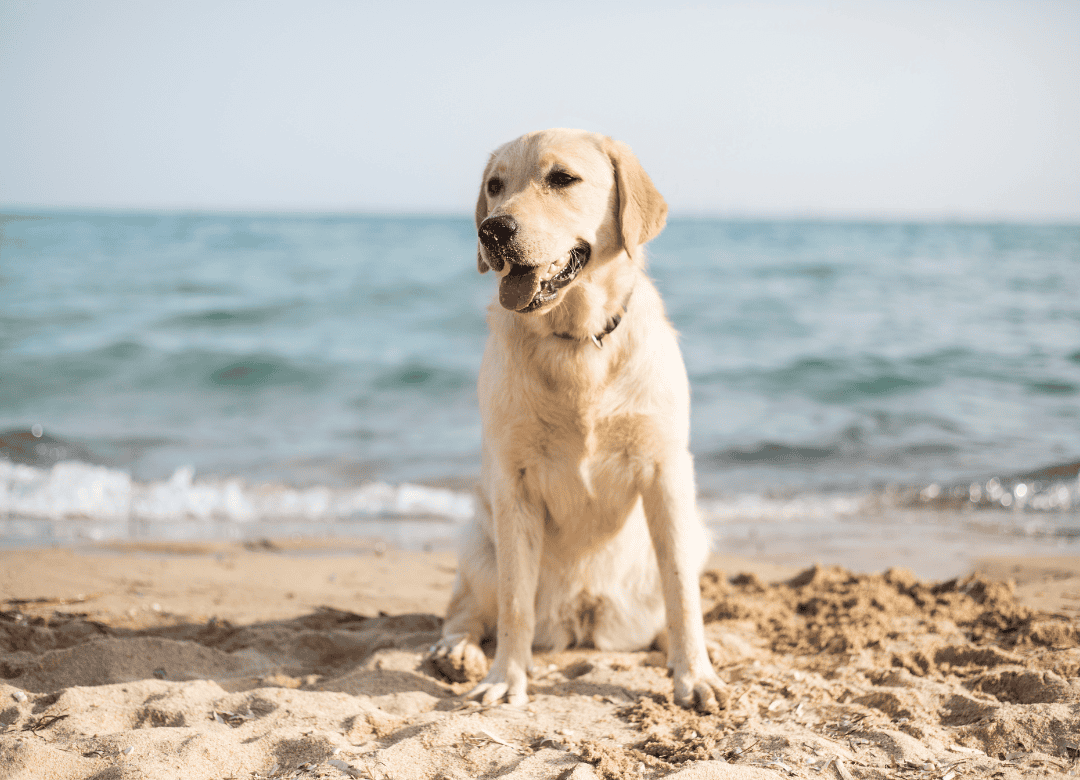

Summer comes with longer days, fun gatherings, and warm (actually hot) weather.
It can be fun and memorable for you and your dog. But avoiding the hazards that come with summer is always foremost on dog parents’ minds.
I’m watching my dog more closely and making sure he doesn’t get overheated. These summer safety tips can help protect your dog from heatstroke, dehydration, water hazards, and other warm-weather dangers.
Use this dog summer safety checklist to help your pup stay safe, healthy, and happy all season long.
Pin For Later! 📌
As an Amazon Associate, I earn from qualifying purchases. I get commissions for purchases made through some links in this article. Learn more here.
Budget Tip:
It doesn't cost anything to walk your dog in the cool morning or evening hours. But it can make all the difference for your dog and help you avoid an emergency vet visit.
Dog Summer Safety Checklist
A few summer safety tips can help keep your dog healthy during the hotter months.
1. Keep Fresh Water Available

Make sure your dog has lots of water during the summer. Water is especially critical for dogs in summer. Remember, not only will he drink more water, but his water will evaporate quickly as well. Also, don’t forget to clean his water at least once a day. This will help to encourage him to drink as well.
In this article, learn how giving your dog the proper amount of clean water saves you money.
2. Provide Plenty of Shade
One of the best ways to cool down a dog is to find a shady spot. That can be under a tree, in your house, under a chair, or under an umbrella. Don’t forget to have cool water nearby.
Learn how creating shade in your yard benefits your dog and wallet in this article.
Note: Just as you need to protect your skin from sunburns and skin cancer, you also need to protect your dog’s skin in the same manner. However, it’s important to select a sunscreen that is free of zinc oxide and PABA. Both are toxic to dogs.
3. Avoid Midday Exercise

By exercising in the early hours of the day, you and your dog will escape the majority of the summer heat. When the temperature rises, it’s difficult for humans to be outside, but your pup has a fur coat. That makes it downright dangerous!
4. Never Leave Your Dog in a Hot Car
Never, ever leave your dog in a closed hot car. If you see a dog in a locked, hot car unattended, please call 911 immediately! A dog can go into distress inside a hot car within minutes, which means time is of the essence.
You may want to review your local laws regarding dogs in hot cars. Some areas will allow you to break the windows. Other areas will only permit authorities to break the windows and free the innocent pup. Either always act quickly!
Learn more about the details of sunscreen for dogs and pets in this article.
5. Watch for Heatstroke Signs
You may be surprised at how quickly heatstroke can happen in a dog. Some signs are excessive panting, thick saliva, staggering, and muscle tremors. If you see any of these signs, rush to your vet!
6. Protect Paws From Hot Surfaces
Your dog’s paws are delicate. Paw booties or even dog clogs are great to protect them from hot sidewalks, rough rocks, toxic weeds and plants, chemicals, and cold in the winter. Surprisingly, it only takes a few minutes for most dogs to adjust to wearing booties.
7. Be Careful Around Water

Water can help keep your dog cool, but it also comes with several summer hazards that many pet parents overlook.
- Dehydration is very common in the summer
- Water intoxication happens when a dog swallows too much water
- Toxic or contaminated water with blue-green algae is a summer hazard
- Drowning. Don’t assume all dogs can swim, or that it’s safe to leave them alone playing in the water. Dog life vests save lives!
Learn how to keep your dog safe around water in this article.
Note: The humidity will determine your dog’s ability to cool himself. Keep your eyes on the humidity levels. If you are experiencing high humidity, keep your dog in the shade, inside, and provide lots of water.
8. Watch for Fleas, Ticks, Bugs, and Rattlesnakes
Always do a thorough check of your dog when you’ve been out hiking or outdoors. Carefully remove ticks if necessary. If fleas are detected, bathe your dog with flea shampoo, comb his fur with a flea comb, and do regular inspections.
However, if you’re not sure if fleas are the source of your dog’s itchiness, try rubbing him/her with a white towel. If you see black specks, then fleas are an issue.
Dogs are often obsessed with bugs. But many bugs and vermin are toxic to dogs. Be careful if you see:
- Spiders of any kind
- Bees
- Wasps
- Hornets
- Scorpions
- Stink bugs
- Snakes, especially rattlesnakes in the west
9. Avoid Toxic Plants and Chemicals
While some plants and bushes are toxic if eaten, others are just irritants if peed on, such as rose bushes. Even some household products are poisonous to your dog.
Goathead weeds and foxtails are a sort of locking weed that you need to examine your dog’s paws, legs, and underbelly for when he comes in from outside. If he ingests these weeds, they could get lodged in his throat, requiring a veterinarian visit and possible surgery.
Discover the best perennial flowers to plant in your dog-friendly yard in this article.
Note: It’s a good idea to add the pet poison hotlines to your phone, just in case. Although keep in mind that these hotlines may charge for their services.
- Pet Poison Helpline – 855-764-7661
- ASPCA Animal Poison Control – 888-426-4435
10. Prepare for Fireworks and Storms

Loud noises will scare even some of the calmest dogs. Try to keep your dog calm. Put on other noises, such as a radio to distract, make sure to have a safe space for your pup, and make sure to provide lots of water. Some people have luck with CBD and other alternative products like Thundershirts or calming beds.
Although if your dog is beyond these tactics, you may need to consult your veterinarian for help and a prescription to help calm your dog on these extreme days.
The tricks that work best for Henry when he gets overly stressed are:
- Calming mushroom treat (Henry loves them)
- Covering his crate and placing it next to me
- Turning on his heartbeat toy
- Putting on his cooling vest if he’s overheating
What To Do If Your Dog Shows Signs Of Heatstroke
If your dog isn’t behaving normally or seems to be struggling, go to the vet immediately.
The signs of a dog’s heatstroke that will be huge red flags are:
- Drooling
- Confusion
- Excessive panting
- Weakness
- Vomiting
- Seizures
- Diarrhea
- Unresponsive, unconscious, or collapsed
If you find your dog exhibiting any of these symptoms,
- Move your dog to the shade
- Apply a wet, but not cold, towel
- Use a fan or AC
- Rush to the vet
Note: Never put your dog in an ice bath or pour water down your pup's mouth. It can cause more issues.
How Can Summer Dog Safety Save You Money?
The cost savings of avoiding summer hazards can be significant. Consider the following for a moment.
| Issue | Estimated Cost Savings |
| Heat Exhaustion/Heat Stroke | $200 – 600+ |
| Paw Burns | $100 – 260+ |
| Tick-Borne Disease Treatment | $150 – 4,500 |
| Toxic Exposure | $300 – 5,000 |
| Dehydration Treatment | $200 – 800+ |
| Drowning Incidents | $1,000 – 15,000+ |
| Healthy and happy pup | PRICELESS!!! |
Frequently Asked Questions
What temperature is too hot for dogs?
Generally, any temperature over 89 degrees Fahrenheit is too hot for your dog. But if your dog is a winter breed like a Husky, is a senior dog, or has medical issues, your dog will have a lower temperature. My dog Henry is mostly black and starts panting when it gets to 70. Pay attention to what your dog needs.
How can I tell if my dog is overheating?
If your dog is panting excessively, drooling, getting confused, or behaving oddly, then move your dog to the shade or a cool spot and apply a wet towel. If your dog doesn’t start acting normally quickly, then see your vet.
Is it safe to walk my dog during the summer?
If you walk during the early morning or later evening hours, it should be fine. But pay attention to your dog. If you have a senior dog, a dog with a health issue, or a northern breed dog, then you may want to take additional measures with a cooling vest or cooling bandana. I generally put on Henry’s cooling vest because he gets hot easily when it’s only 70 degrees Fahrenheit.
Related posts:
- 10 Easy Ways to Cool Down Your Dog in Summer
- Do Dog Cooling Vests Help Summer Dogs?
- Fun in the Sun: How Sunscreen for Dogs Can Save You Money
- Shady Paws! How Dog Shade Saves Money!
- 8 Awesome Reasons Your Dog Needs Water
- Dirty Water Risks To Avoid With Your Dog
- Splash-Worthy! Essential Dog Water Safety Is Money-Wise!
Final Thoughts On Summer Dog Safety
Basic summer safety tips can keep your dog healthy and your bank account as well. I always avoid taking Henry out during the heat of the day. He stays inside in the cool house and even wears a cooling vest on super hot days. It gives me peace of mind to know he’s safe and makes the summer much more fun. A little preparation goes a long way, and many of the most effective summer safety tips are completely free.
Pin This For Later! 📌


Fantastic tips that need to be shared as often as possible, so more dog parents are aware of them. I’m absolutely shocked at the number of people I see walking their dogs not only in the heat of midday, but without a drop of water in sight.
Thanks! I’m so happy you found this summer tips helpful. I’m shocked with how a lot of people walk their dogs when it’s hot. I keep hoping that it’s simply a matter of not knowing better.
Excellent article, Terri (as always)! It’s always good to refresh/remind folks of heat care for dogs…too often we still hear horror of dogs being left in cars and outside overheating. Thank you for mentioning about Huskies and northern breed dogs who do need to get cool/have cooler collars & beds/be in the cool a/c – as do dogs with epilepsy, as heat/overheating can be a trigger (it was for my Gibson). Reminders such as this article are so important, and I’m sharing this with my readers!
Thanks, Dorothy! Dogs being left is just heartbreaking. This is the first year is probably 20 years that I haven’t had to call for help for a dog in a hot car. But to be honest, I haven’t been out and about much this summer. AC is great. It was out for a bit and I thought I was going to melt. Henry was fine with his cooling vest, which was my main concern. I appreciate your continued support.
Fantastic points it is so important to remind us to keep our dogs safe from the heat and summer hazards. I watch Nili like a hawk on hot days.
Thanks! I bet you watch Nili like a hawk. Henry says Nili needs a cookie.
This is a must-save checklist for every pet parent heading outdoors! Panting heavily to cool down takes a massive toll on a dog’s energy and cellular system during summer. Coupling basic safety habits with non-toxic, highly bioavailable cellular support makes a world of difference. We rely on lab-tested wellness options from Innovet to protect our sweet boy’s stamina and keep him feeling comfortable all summer long
Thank you so much, Mary! I’m so glad you like the checklist. I will have to look into the Innovet products. That sounds intriguing. Thanks for the info and pets to your pups!