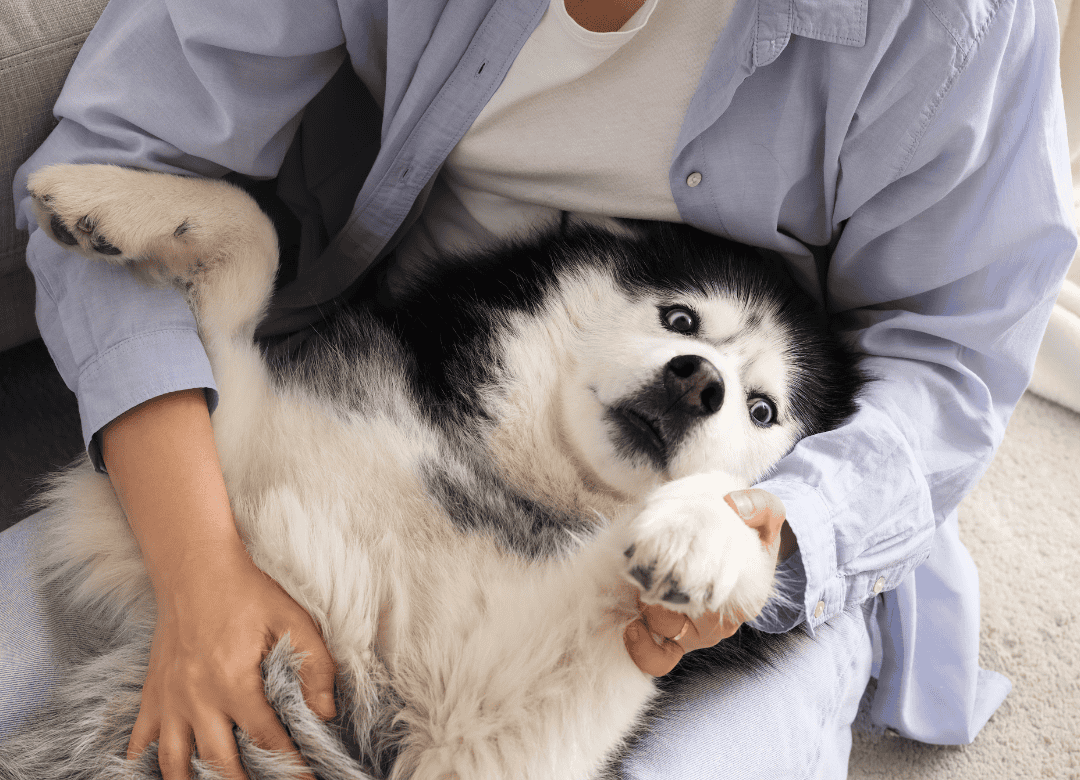

You finally get a chance to sit down and relax after a hectic day. You take a deep breath, and there’s your dog trying to jump in the middle of your lap and your cup of tea.
The timing is not random. If you are wondering why your dog is so clingy all of a sudden, fall affects dogs in ways you may not have considered. My dog, Henry, has been more clingy as the weather has cooled.
Here’s how fall changes things, and what to do to help your sudden Velcro pup
Shorter Days Shift Your Dog’s Internal Clock
Dogs run on light, not clocks. Less daylight means more melatonin, which means sleepier dogs.
A dog who naps more during the day often wakes up needing something from their human. But you can counter this behavior by:
- Feeding and walking at the same times even as the light changes
- Turning the lights on earlier in the evening and the morning as necessary
- Realizing it will take a week or two for your dog’s body to adjust
Henry is napping longer next to me in the morning and evening. He also thinks dinner should be served at 3 p.m., which is two hours early. So far, the chef hasn’t accommodated his demands.
Less Outdoor Time Means Unspent Energy
As the season changes, so do the weather and the light. There may be more rain, mud, and wind. Dark evenings may quietly shrink walking times. A twenty-minute walk might become a five-minute trip to the yard.
That missing energy has to go somewhere. Following you room to room is one of the cheapest ways a dog can spend it.
You can adjust for this behavior by:
- Trading distance walks for sniffing time, which tires a dog faster than speed
- Scattering dinner kibble across the floor and letting your pup hunt for the morsels. Henry thinks it’s more fun than an ordinary bowl.
- Adding one short training session a day. Even three minutes uses up more energy than you would expect. Training is one of Henry’s favorite activities.
Fall Sounds Put Dogs on Alert
Fall means school starts. Work schedules shift. The people who were home all summer are gone for eight hours.
That can mean a clingy dog in the evening. It’s not your dog being annoying. Instead, it’s a sign your pup missed you. Kind of sweet.
A few tricks that can help reduce nighttime clinginess include:
- Keeping departures and returns low-key and almost boring. I know this one isn’t easy. I love Henry greeting me excitedly as if I were Taylor Swift. It makes coming home fun.
- Leaving a stuffed frozen toy or lick mat can help for the first few minutes of alone time
- Building in ten minutes of focused attention when you come home, then going about your evening activities.
When Clingy Behavior Deserves a Vet Call
Call your vet if you notice:
- Clinginess that came on suddenly and is out of character
- An older dog or a special-needs pup showing a new change
- Disorientation as the days get shorter
- Trouble moving easily or limping
- Restlessness, pacing, or panting
- A change in appetite
- A change in how much water your dog drinks
The Bottom Line on a Clingy Dog

A Velcro dog in October is usually a dog with a scrambled routine and unspent energy. It’s not a dog with a problem.
Steady mealtimes, sniffing walks, and a few minutes of brain work can help fix most of the clinginess behavior.
But if the change came on fast and is completely out of character for your dog, call your vet.
Fun Dog Fact: A soft, relaxed gaze between dogs and their humans increases oxytocin, the happy hormone, for both of you. A minute or two of calm eye contact with a cookie at the end helps with bonding. Skip the game if your dog looks away or seems uneasy, since a hard stare feels like a challenge to some pups.