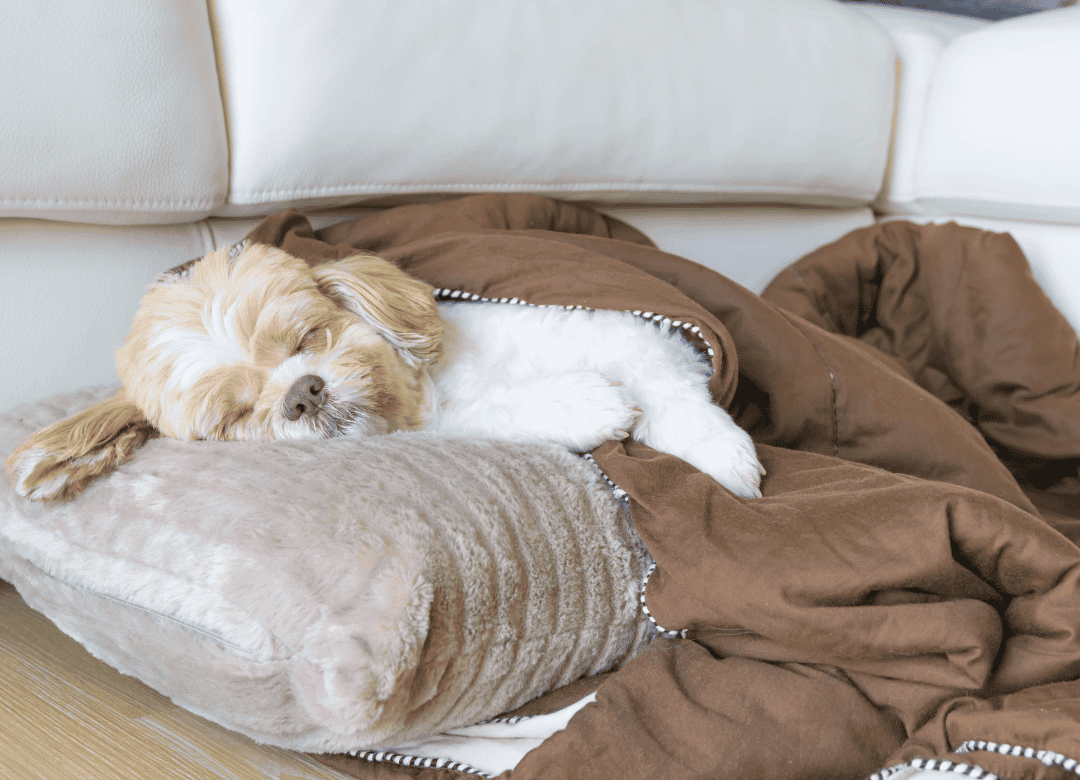

Does your dog suddenly seem like they need a second, or third, or what feels like an all-day nap? You are not imagining it.
As the days get shorter and the temperatures drop, dogs genuinely do sleep more. Henry is proof. He logs more nap time during the fall and winter. But he also turns into a full-blown zoomie machine the second he steps outside in the evening.
More sleep and more chaos. It turns out that is completely normal.
Why Dogs Sleep More When Daylight Decreases
Dogs are sensitive to light. Shorter days mean less melatonin suppression, which means your dog’s body is literally getting sleepy signals earlier and more often.
It is the same reason you might feel like going to bed at 8 PM in November.
- Less daylight = more melatonin = more drowsiness
- Cooler temperatures encourage curling up and conserving energy
- Reduced outdoor activity time means less stimulation to stay alert
Your dog is not being lazy. Their biology is doing exactly what it was designed to do at the moment.
Normal Behavior vs. a Red Flag: When to Call the Vet
Seasonal sleepiness is one thing. A sudden, dramatic change in sleep that comes with other symptoms is another.
Probably normal:
- Sleeping more as fall or winter settles in
- Still energetic when active (hello, zoomies)
- Eating, drinking, and bathroom habits unchanged
Worth a vet call:
- Sleep change came on suddenly with no seasonal shift
- Lethargy even during walks or play
- Changes in appetite, weight, or water intake
- Stiffness when getting up after napping
If your gut says something is off, trust it and call your vet.
The Zoomie Paradox: More Sleep, More Energy
Henry sleeps more in the fall and winter. He also loses his mind shooting around the property with zoomies.
This is not a contradiction. Cooler air is energizing for dogs. Dogs are built to be more active with lower temps. It’s easier on their joints, their breathing, and their overall comfort level.
When they do run, they run hard. Henry is small, but you’d never know it once he hits top speed.
In short, your dog may be sleeping 14 hours and then sprinting laps around the yard like they have somewhere very important to be in exactly 30 seconds. That is a healthy fall or even winter dog.
How to Make the Most of Fall and Winter Sleep-and-Zoomie Season
The goal is not to fight the seasonal rhythm, but rather work with it.
- Keep walks consistent even if shorter. Routine matters more than duration.
- Add enrichment indoors on low-energy days. This can be sniff mats, food puzzles, a stuffed Kong, or a frozen lick mat (Henry’s favorite year-round). Mental work is tiring in a good way.
- Let the zoomies happen. A safe backyard sprint is great exercise and genuinely joyful to watch. I laugh every time I see Henry jump and speed off as if he’s a NASCAR driver.
- Watch for stiffness. Cooler temps can be harder on older joints. A quick warm-up walk, or even a massage before harder play or longer walks, helps. Henry loves his daily massages.
The extra naps are not wasted time. A rested dog is a happier dog.
The Bottom Line on Why Dogs Sleep More in Fall (and Even Winter)
Shorter days, cooler temps, and a shift in light are all cues that tell your dog’s body to slow down and rest more. It’s seasonal. It is completely normal.
Henry sleeps more in the fall and winter. He also runs faster, burning off his excess zoomie energy.
I would not change a thing.
Fun Dog Fact: Dogs sleep best near their people. It’s an instinct carried over from their wild ancestors who felt safest sleeping in a pack. Sweet and comforting.