
Most dogs wear collars every single day. Most of those dogs are quietly suffering because of it.
The damage isn’t dramatic or immediate. It builds over time in ways you won’t notice until something goes wrong. Collapsed tracheas, neck injuries, thyroid problems, even eye issues have all been linked to collar pressure that happens during normal daily walks. Veterinarians see these cases constantly, yet millions of dog owners have no idea a simple gear switch could prevent most of it. Harnesses aren’t just trendy accessories. They’re tools that actually protect your dog’s body in ways a collar physically cannot.
In this article, you’ll discover the specific health risks collars create that most pet parents never consider and why harnesses solve problems you didn’t know existed. You’ll learn which harness styles work best for different dogs, what features actually matter versus marketing hype, and how this one change can save you hundreds in vet bills down the road. If your dog still walks on a collar, this might be the most important switch you make all year.

Budget tip:

A simple little dog harness can save your dog pain and save you thousands of dollars in vet bills. It’s an essential purchase. Think of it as essential as dog food. Yet, you don’t have to replace it every month or so. It’s a great investment, as long as it fits properly. You’ll get your money back many times over. It’s more than a simple win-win…it’s a no-brainer lottery win for you and your dog!
What are the benefits of dog harnesses?
There are a few benefits you and your dog will get when you use a dog harness. They include:
- Not easy to slip out of like with a dog collar
- Generally provides comfort for your dog when walking or hiking
- Reduces your dog’s chances of getting their legs tangled in their dog leash
- Helps to reduce back pain
- Prevents throat damage and trachea collapse (especially with pulling dogs)
Are there any cons to using a dog harness?
Poorly fitted harnesses can cause pain or make it easy for your dog to escape. Basically, think about how painful it is to wear shoes that are too small and then try to run in them. It’s not fun!
- Could be hotter for your dog during the summer months
- Often takes a few minutes longer to put on/off (might even be a learning curve involved)
My dog is a pulling dog. What do I look for in a dog harness?
The main items you’ll want to look for when your dog wants to lead you on your walks are:
- Front clip harness
- Properly fitting harness with adjustable straps
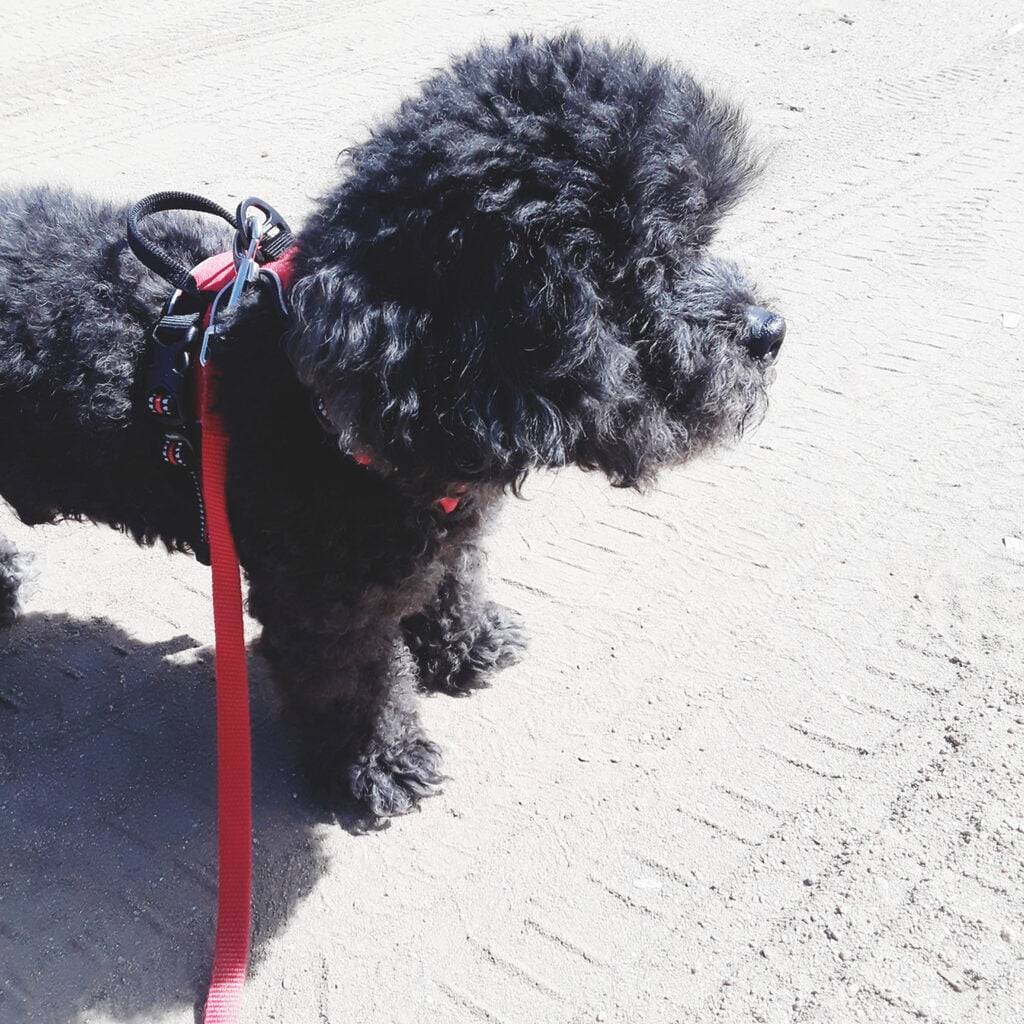
NOTE: I have a harness for Henry with a back clip and a front clip leash attachment. This is handy, in case he thinks he needs to lead with his nose. It also has a loop on the back for a quick pickup for those off-leash dog encounters. Of course, Henry is a small dog. I can’t imagine the loop does a lot of good for a large dog.
This harness is very harness is very similar to the one I have for Henry.
What’s the big deal with dog harnesses?
Even with a non-pulling dog, using only a dog collar can put more pressure and stress on your dog’s throat and trachea. Over time, this can result in tracheal collapse.
What are the symptoms of tracheal collapse in dogs?
The cough is usually the tall tell sign. It will be a “honking” cough. You may also notice your dog with such symptoms like:
- Labored or difficult time breathing
- Immediate coughing when any pressure is put on your dog’s neck or is picked up
- Gagging and coughing (vomiting may or may not follow the gagging/coughing)
- A sound of wheezing when breathing
- Bluish tint to gums (Cyanotic), which means oxygen is low
Are certain dogs more prone to tracheal collapse?
Yes, tracheal collapse can be genetic and not environmental. Dogs that are more prone to tracheal collapse are generally small dogs and toy breeds. They include, but aren’t limited to breeds such as:
- Pugs
- Toy Poodles
- Yorkies
- Pomeranians
- Chihuahuas
How do I avoid tracheal collapse with my dog?
There are three ways to reduce the risk of tracheal collapse in your dog. Each puts pressure on your dog’s respiratory system. However, some are admittedly easier to do than others. They include:
- Avoid thirdhand and secondhand smoke to the best of your ability
- Bypass hot and humid environments, again to the best of your ability
- Use a properly fitting dog harness (and a no-pull harness, if your dog tends to pull when leashed)
NOTE: If you’ve ever seen a dog with severe tracheal collapse, it’s a horrible disease. They can’t breathe and don’t understand. It’s truly heartbreaking! I personally witnessed a friend’s dog struggle with this disease. (He was a large dog too). His struggle is why Henry always wears a dog harness when leashed.
Won’t my pet insurance pay for tracheal collapse for my dog?
That will depend on your pet insurance. However, you should know that there is no cure for tracheal collapse. So, once the damage is done, it’s a matter of managing the condition. Sometimes it will require surgery. Most times it will require pain medications and other medications. Either way, your dog’s quality of life is compromised and will never be the same.
What are the cost savings when using a dog harness?
This is always the eye-popping part. Of course, we all want to be great dog parents, but sometimes we need to see the dollars to have a big kick in the backside to do it. So, here are the numbers.
| Using a collar and your dog wiggles out and escapes and possibly gets hit by a car | $0-8,000 |
| Treating your dog with throat or tracheal collapse | $5,500+ |
| Diminished quality of life for your dog | IMMEASURABLE!!! |
Related article:
- Steps To Build A New Dog Budget
- Is There a Cheap Easy Way to Train Your Dog?
- Does My Rescue Dog Need A Positive Reinforcement Dog Trainer?
- Keeping A Dog Safe With Off-Leash Dogs
- Easy Dog Emergency Vet Visits Tips
- Secondhand Smoke for Dogs: Facts You Need!
- Are There Any Benefits Of Mobile Vet Services For My Dog?
The secret benefits of dog harnesses
Yes, the secret benefit to dog harnesses is that you may prevent tracheal collapse, keep your dog in good health, and avoid very pricey vet bills. My goal with Henry is to always keep him in good health to the best of my ability.
So, if that means he gets a cool harness, it’s a great win for me and him. He doesn’t know that I actually have more than just letting him look good in mind. I’m focused on his health, which keeps my budget in check. That’s a tail wagging, paws-up benefit or maybe it’s benefits? Hmm.. Either way, it’s a good thing for Henry and your furry friend.