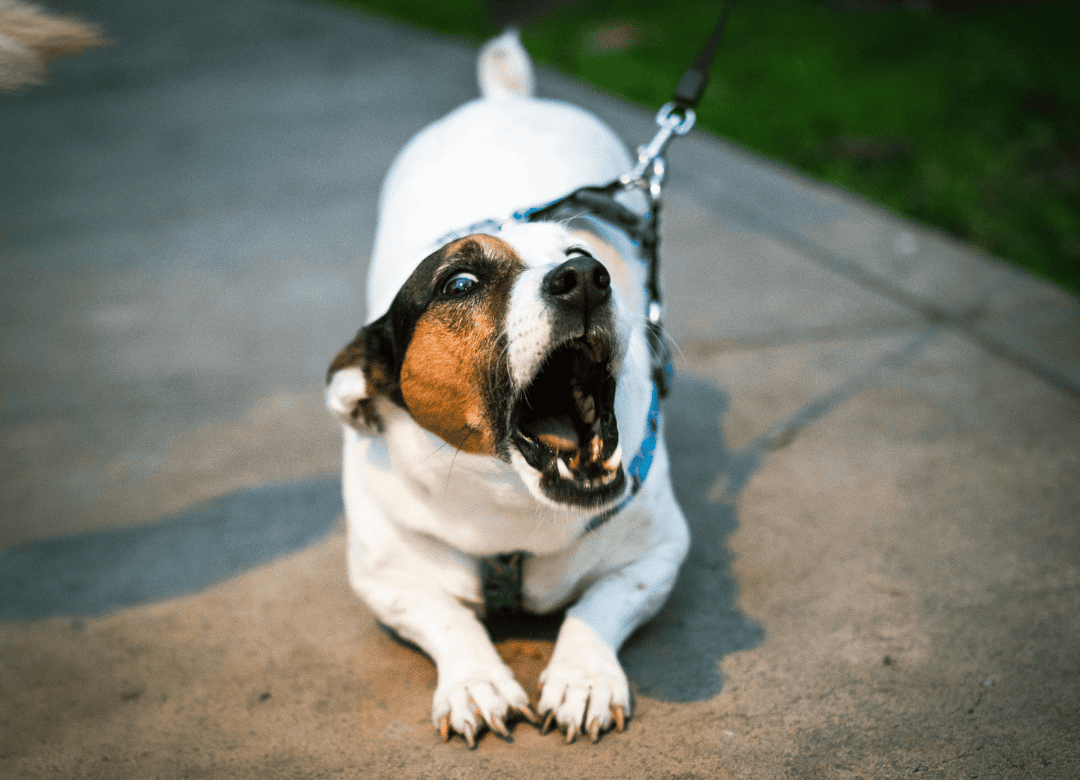

Henry barks at other dogs as if he has the key to let the dogs out and the cookies to party until the cows come home.
It does not matter if the other dog is across the street, on a leash, or minding his own business in a yard. Henry has something to say, and he wants to say it loudly.
If your dog barks at other dogs, discover what is actually going on and what you can do about it.
It’s Not Always Aggression
The number one thing most dog parents get wrong is that barking at other dogs means aggression.
Dogs bark at other dogs for several reasons:
- Excitement (“Let’s play!”)
- Frustration (“I want to meet you but I can’t!”)
- Alerting (“There is another dog nearby, FYI”)
- Fear or insecurity (“You’re too close and I don’t like it”)
- Territorial behavior (“This is my turf”)
Henry falls firmly in the excitement camp. His bark translates roughly to: “Let’s be friends and play NOW!”
What Reactivity Actually Looks Like
Reactivity is when a dog has an extreme response to something in their environment.
A dog who lunges, barks repeatedly, and cannot settle down after seeing another dog is showing reactive behavior. That does not automatically mean the dog is dangerous. It usually means your pup is simply overwhelmed in the situation.
Signs your dog is reactive (not just overly enthusiastic):
- Cannot redirect attention once they spot another dog
- Barking escalates even as the other dog moves away
- Body is stiff, hackles raised
- Has bitten or snapped at other dogs in the past
Why Some Dogs Are More Reactive Than Others
Reactivity tends to have a few common links:
- Genetics. Some breeds are naturally more alert and vocal.
- Lack of early socialization. Dogs who did not meet many other dogs as puppies may find them more alarming as adults.
- A bad experience. One scary dog encounter can leave a lasting impression.
- Leash frustration. Dogs who love other dogs sometimes bark because the leash prevents them from saying hello the way they feel is best.
Rescue dogs, like Henry, sometimes arrive with a lack of social history that makes barking at other dogs more common.
But my childhood dog, Tag, was definitely aggressively reactive. He came to us with distemper and couldn’t be around other dogs. He became very protective of his human pack and didn’t like other people or animals.
What You Can Do About It
Most of the time, leash reactivity and dog-directed barking are manageable.
A few approaches that work:
- Increase distance. If your dog loses focus when another dog is nearby, create more space. Distance is your friend.
- Practice “find it.” Toss a treat on the ground when you spot another dog. Get your pup’s nose down and their brain redirected.
- Reward calm. Any moment your dog notices another dog without reacting, reward it. Make that moment count with a cookie and praise.
- Avoid on-leash greetings. Two leashed dogs meeting head-on is unnatural for dogs and often triggers frustration barking. Instead, create distance before meeting.
Consistency matters more than perfection.
The Bottom Line on Why Your Dog Barks at Other Dogs

Most dogs who bark at other dogs aren’t dangerous. They’re simply communicating.
The job of being a dog parent is to figure out what they are saying and respond properly.
Henry is saying he wants a new playmate. There’s never a doubt about it with him.
Fun Dog Fact: Barking can reach up to 100 decibels. That’s more than a motorcycle, lawnmower, whistle, and a musical concert. Barking sound can be similar to the decibels produced from a thunderclap. That’s not easy to ignore.