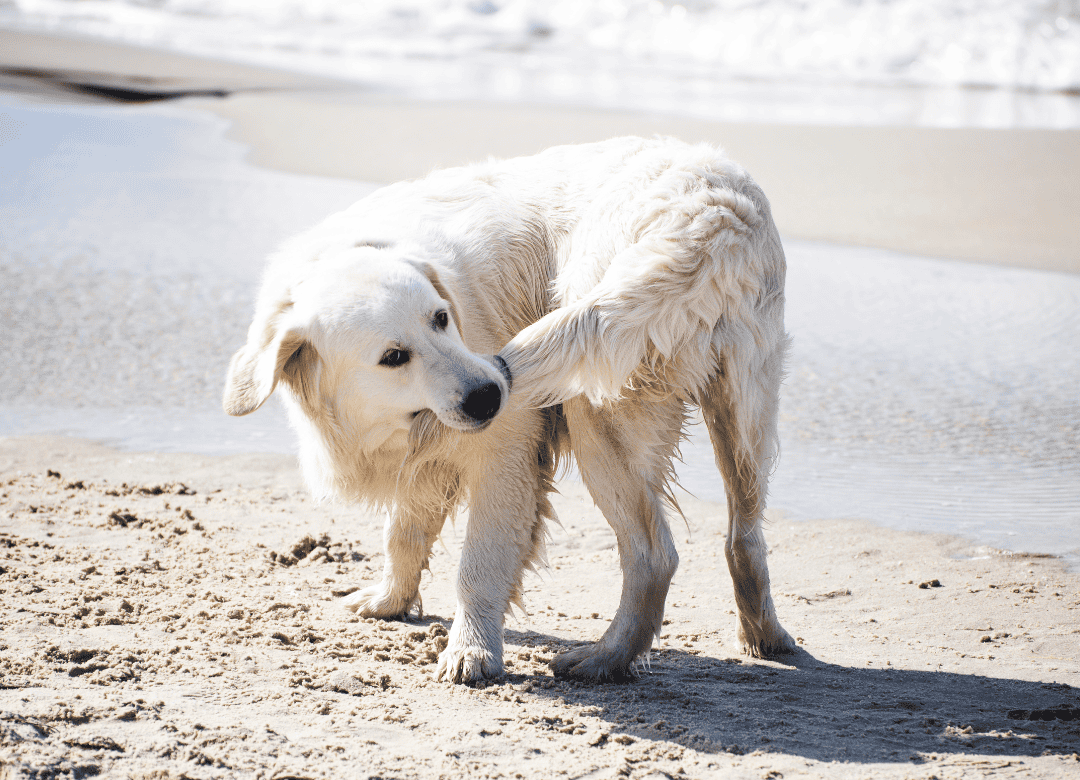

Who doesn’t giggle when they see their dog spinning in circles trying to catch their tail?
It’s funny, odd, and always entertaining.
The behavior can be for fun or a sign that something is irritating your dog.
But why do dogs chase their tails? There are several reasons for this funny behavior.
That Tail Chasing Is A Way Of Playing
Dogs love to play. Finding something so close they can chase is simply fun.
Heck, my dog, Henry, is all about fun. He’ll chase leaves and even do a wiggle bounce at deer to encourage them to play with him.
Puppies, on the other hand, are learning about their bodies and world. They will often jump, bite, and chase as they explore. This includes chasing their tails.
Sometimes that weird wagging thing that is always following your buddy becomes too irresistible to ignore.
A quick round of tail chasing followed by their normal day routine is generally just innocent play.
My childhood dogs, Tag and Homer, both loved chasing their tails. I remember watching them spin around. It always made me laugh.
Henry came to me with a bobbed tail. But I’ve often wondered what his full tail would have looked like or if he would’ve chased it. I’m guessing he would definitely be a tail chaser.
Tails Are Great For Bored Dogs
Tail chasing can become a way for your pup to get more exercise, playtime, and enrichment.
If your dog is spending a lot of time chasing their tail when they’re otherwise healthy, try adding a sniff walk, puzzle toy, short training session, or another enrichment activity to their day.
A little extra entertainment may be all they need.
That Spinning Might Mean Their Tail Is Itchy
Sometimes your dog is trying to reach an itchy or irritated spot. It’s similar to that spot on your back that causes you to rub up against a wall. Perhaps your dog thinks that’s funny.
For your dog, fleas, allergies, skin irritation, anal gland problems, and other issues can cause itching around the base of the tail. You may see your dog chase, bite, lick, or chew the area to soothe the itch.
If tail chasing suddenly becomes frequent, take a closer look at the skin and fur around their tail. Make sure to remove any mats that can be irritating.
Tail Chasing Might Mean Something Hurts
Sometimes tail chasing is a sign that something hurts.
The pain might be from an injury, irritated skin, or another problem.
Knowing what’s normal for your dog is important. It tells you when you need to investigate or call your vet.
Yes, Tail Chasing Can Be A Way Of Grabbing Your Attention
Dogs are great at connecting their behavior to our reactions.
If your dog chases their tail and you immediately laugh, talk to them, or chase after them, they may learn that tail spinning gets your attention.
That doesn’t necessarily mean anything is wrong.
It may simply mean you have a furry family member who loves attention.
When Should You Worry About Tail Chasing?
If your dog is only occasionally a tail chaser, like Tag and Homer, and they are otherwise happy and healthy, it’s most likely an innocent behavior.
But frequent or obsessive tail chasing deserves a little more attention.
Talk with your veterinarian if your dog suddenly starts chasing their tail frequently or if the behavior is accompanied by:
- excessive licking or biting
- hair loss or irritated skin
- scooting
- signs of pain
- whining or distress
- changes in appetite or energy
- difficulty stopping the behavior
If your dog seems unable to stop, repeatedly interrupts normal activities to chase their tail, or spends a large part of the day doing it, that’s different from an occasional goofy spin.
The important thing is to know if the behavior is new, excessive, or happening alongside other changes.
The Bottom Line on Why Dogs Chase Their Tails
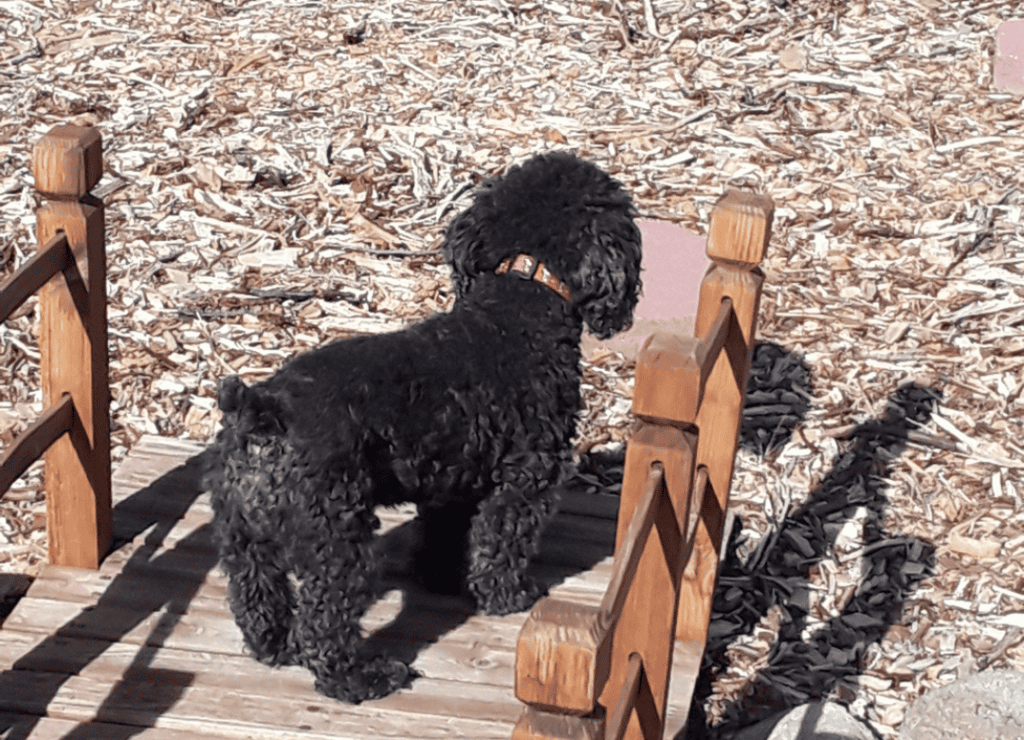
Why do dogs chase their tails?
They’re usually playing, bored, or trying to tell you that something isn’t quite right with their backside.
If your dog occasionally spins in a circle, catches their tail, and then happily trots away, you probably have nothing more than a goofy dog entertaining themselves (and you).
But when tail chasing suddenly becomes frequent or obsessive, it’s worth figuring out why.
Knowing what’s normal for your dog makes it much easier to notice when something changes. Catching small problems early can sometimes help prevent bigger and more expensive problems later.
Fun Dog Fact: Puppies learn a lot through play with their littermates. Chasing and playing with each other's tails can be part of that early social play, helping puppies practice communication, boundaries, and bite inhibition.
What’s Next?
- Why Do Dogs Sleep on Their Backs?
- Why Are Dogs Sleeping With Their Eyes Open?
- Why Dogs Sleep With Their Butt Facing You
- The Truth About Why Dogs Do That Spin Before Lying Down
- Hidden Dog Expenses: Why Good Dog Parents Spend More Than They Expect
Does your dog chase their tail? Or do they just give it an occasional suspicious look? Tell me about your pup in the comments!