


You just settled into your comfy chair after a long day. Then your dog starts whining for no apparent reason.
You feed your pup. He’s played outside, gone pee, and even had a dog treat. So why is your dog crying?
This happens more than you think to dog parents. Even if there doesn’t appear to be a reason for the whining, there most likely is a cause. Even my dog, Henry, will whine occasionally. He has a reason. But it can take some sleuthing to discover it.
In this article, you’ll learn why dogs whine, what it means, and when you need your pup needs medical attention. You simply need a bit of translation for dog whining and dog crying. By the end, you’ll be able to answer the question, “Why is my dog whining?”
Budget tip: Knowing when your dog needs attention, support, or medical attention is a great skill. Finding the triggers and emotional triggers of whining and using behavior modification is a game-changer for your pup. The good news is that you can hone these skills. By knowing what your dog needs and acting, you can prevent a bigger issue or destructive behavior from developing. That’s a great win-win for your dog and your wallet.
As an Amazon Associate, I earn from qualifying purchases. I may get commissions for purchases made through this link. Learn more here.
📌 PIN FOR LATER!

What Does Dog Whining Mean?
When your dog whines, it’s a form of communication. Your pup is trying to tell you something, even if it seems your dog whimpering is for no reason.
In general, a dog whining is:
- Dog communication. Sometimes a whine goes further than a bark
- A sign of excitement, stress, or pain
- A behavior habit because it yields the response your pup desires
- Cognitive dysfunction
Why Dogs Whine: Common Reasons Dogs Whine
There can be many reasons a dog whines. But they will usually fall into one of five categories.
Dog Whining for Attention
Yes, just like a child, your pup might be attention-seeking, whining for your attention. Your pup may even be a bored dog and wants you to entertain him. Sometimes the best way to get your attention is through a whine or whimper. I always jump when I hear Henry whimpering. He knows his attention-grabbing behavior will cause me to act. Once I pick him up, he settles down.
The way to tell if your dog is whining for attention includes:
- Following you
- Stops when ignored
- Dropping a toy at your feet
- Trying to jump on your lap
How to respond to attention-grabbing whines from your dog?
Most behaviorists say to ignore the behavior to break the habit. I always want to make sure Henry is okay. Besides, I don’t mind snuggling with him if that’s what he needs at the moment.
Dog Whining at Night or While Sleeping
Henry will often whine at night after dinner. He probably is hearing wildlife outside and wants reassurance that he’s safe.
He even will whine or whimper in his sleep. I assume he’s playing in his sleep. If the whimper turns to crying in his sleep, I generally wake him. I don’t want him to experience a nightmare.
Most common night dog whining includes:
- Anxiety anxious whining
- Fear or distress
- Aging and cognitive decline
- You can calm your night-whining dog by:
- Petting
- Calm voice tone
- Heartbeat toy
- Calm cookie
How to respond to nighttime dog whines?
If your dog is whining at night due to anxiety or restlessness, creating a calming bedtime routine can make a big difference.
This might include a short walk, a consistent bedtime, and something that helps them settle. For example, calming treats (like the ones I use for Henry) can help take the edge off, especially during stressful times like storms or schedule changes.
Some dogs also benefit from comfort items that mimic companionship. A soft toy with a gentle heartbeat can be especially helpful for dogs who struggle to relax or sleep alone.
Senior Dog Whining and Pain

Dogs can be subtle with their pain and discomfort. But whining is one way they may express discomfort.
Aging dogs can also experience arthritis and cognitive decline, which can cause whining.
How to respond to a senior dog or pain-induced whines?
Monitor behavior changes. If whining is persistent or excessive, check with your vet or even a pet behaviorist.
Dog Keeps Whining in Crate or Alone
Dogs left in crates or not properly crate trained, may whine when in their crate. This is due to the dog:
- Crate confusion (not sure why they are in the box or how to get out)
- Separation Anxiety
How to respond to dogs whining in a crate or left alone?
If your dog keeps whining in the crate, it’s often a sign that they’re not fully comfortable being alone yet.
Along with gradual crate training, it can help to make the space feel more secure and less empty.
Some dogs settle faster when they have something comforting nearby, like a heartbeat-style toy that mimics another presence.
You can also pair crate time with something positive, like a calming treat, so your dog starts to associate being alone with feeling safe instead of stressed.
Dog Whining and Shaking or Pacing
Sometimes, dog whining will be accompanied by pacing or shaking, which could be triggered by a loud noise like thunder or fireworks. This could be a sign of:
- Stress
- Fear
- Pain
- Dementia or Alzheimer’s with an older dog
How to respond to dogs pacing and shaking while whining?
If this is a new behavior and you’ve ruled out stress or fear, then consult your vet to rule out medical issues.
When Henry is whining and shaking (usually weather-triggered), I’ve found that giving him a calming treat and turning on his heartbeat toy makes a noticeable difference. He settles down into his safe spot as if nothing is wrong.
Note: Puppies can express whining behavior as they are left alone, hungry, or looking for their mom.
When to Worry About Dog Whining
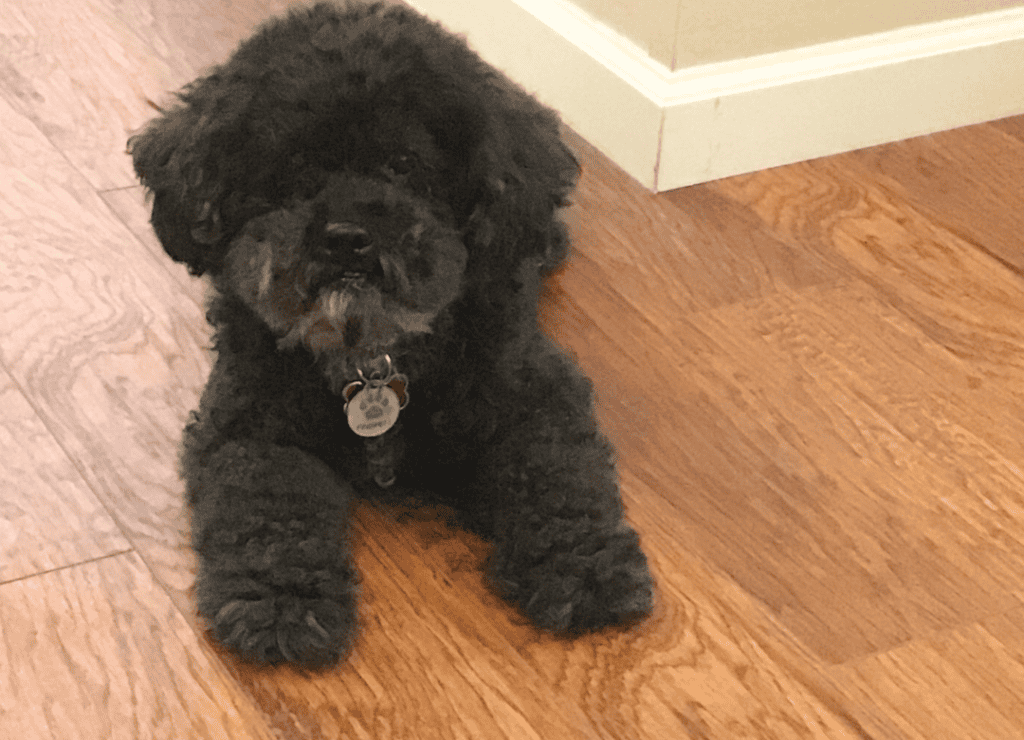
Sometimes dog whining is a symptom of something more serious. In these cases, often the whimpering:
- Has no apparent cause
- Is sudden or a new behavior
- Is excessive and accompanied by such issues as:
- Vomiting
- Diaharra
- Limping
- Lethargy
- Aggression
- Excessive licking
- Frequent urination
When in doubt, always talk to your vet.
Tips to Reduce Excessive Whining
Sometimes your dog’s whining is just a cue that things are a bit off in your household. You can often reduce your dog’s whining with:
- A constant daily routine
- More physical activity during the day
- Increased mental stimulation
- Aid of calming tools like a heartbeat toy and a calming treat
- Easing into crate training gently
Cost Savings Of Helping Your Dog’s Whining
You may not think that there is a cost savings to your dog’s whimpering. But there can be a future cost. Consider the following for a moment.
| Possible Issue | Estimated Cost |
| Dog pain | $70 – 1,900+ |
| Destructive fear or anxiety behavior | $500 – 10,000 |
| Cognitive decline | $75 – 300 |
| Happy and Healthy Pup | PRICELESS!!! |
Related Articles For Whining Dogs:
- Dog Licking Paws: Why Dogs Lick Their Paws and How to Stop It
- Dog Crate Benefits: Happy Pup and Wallet!
- Effectively Calm a Dog: Surprising Solutions!
- Behaviorists for Dogs: Miracle Workers for Mischievous Mutts
- Free Calculator to Determine Your Dog’s Daily Mental Stimulation Needs
FAQs About Dog Whining
Why is my dog whining and pacing?
Dog whining and pacing together is a sign of anxiety, stress, fear, pain, or cognitive decline. Consult with your vet to ease your dog’s discomfort.
My dog keeps whining in his crate. What should I do?
The crate might be triggering anxiety for your dog. Try easing into crate training more gently with just a few minutes at a time. Don’t leave the room until your dog is more comfortable.
Why is my dog whining for no reason at night?
It could be for attention, environment, or emotional triggers like the wind or wildlife, or cognitive decline.
Can senior dogs whine more at night?
Yes, as a dog ages, they may become confused at night. It’s a form of Alzheimer’s known as Sundowners. Also, pain from arthritis can cause whimpering. If you suspect your dog is experiencing these issues, talk to your vet for suggestions to help make your dog comfortable at night.
Final Thoughts on Why Dogs Whine
I admit, the first time I heard Henry whine for no apparent reason, I jumped. I thought the underlying cause was pain. I quickly discovered he wanted attention. But whining can be a sign of discomfort, stress, anxiety, boredom, or even aging. Any dog breed, puppies, adult dogs, or older dogs may whine at some point. It’s best to monitor your dog’s daily behaviors. If anything is concerning, always consult your vet. Don’t tell Henry, but I’m actually happy when he wants more attention and whines for it.
📌 PIN FOR LATER!



Your advice is fantastic, and I love the way you listed scenarios, possible reasons and what to do about it. You’re so right, whining is one way for our dogs to communicate, and it’s super important to try and figure out what they’re saying!
Thanks, Hindy! It definitely is one way they communicate with us. We just have to decode what that whine means at that moment.
Jessie whines for attention & in bad weather.
Aww, poor Jessie! Give her extra pets for me and Henry.
Always great info! My Wolfie would whine for attention! Which I was happy to oblige him with hugs and walks. He did. have anxiety and separation anxiety as he got older and after the rest of the pack passed, so he definitely had periods of whining from missing his family I believe…and it got really bad for him that my vet prescribed meds and I had supplements to help him. As well as stuffies, and me!
When they were both young, Chloe and Wolfie had CCL surgeries – Chloe had to have both legs done at one time, and that was the only time when they were young that they whined, which I knew was from pain, and the meds! Thankfully, they healed well after them. I think part of why they never whine otherwise back then was because they all had each other.
When our Chloe was older, she was 11 and started whining – although she was our resident chatterbox, whining was out of the norm for her – and tragically, it turned out she was in sudden liver failure. What an awful shock – she had just had great bloodwork and check-up four months prior! The vet said it’s fast once it sets in, and she had to come right over after that emergency bloodwork to help her across the Rainbow Bridge before everything started to shut down. That was awful. Just horrible. I can’t imagine if we didn’t call…so yes, call the vet!
Sharing this with my pet parent readers!
I think grief whining or depressed whining is a thing. Poor Wolfie. I know he got extra attention when he needed it.
Poor Chloe. That’s awful for it come on so suddenly and be so painful for her.
I totally agree, if you ever have a doubt always call your vet.
Thanks as always for your wonderful insights and for sharing with your readers. I really appreciate it!