
Last updated on March 8th, 2026 at 09:11 pm
While 80% of people admit they engage in spring cleaning, do you ever think about your yard? Do you have a safe dog yard, or is it time to clean out the hazards?
Spring is also the perfect time to walk your yard and make sure he/she is truly safe for your dog. Warmer weather brings more outdoor time, emerging plants and pests, and hazards that dogs love to explore but can seriously harm them. This guide walks you through the most common dangers every dog parent should avoid. Even better, it gives you smart ways to protect your pup and your wallet.
I have to admit I have been shocked at times to find dangers for my dog, Henry, in our yard. Some things can easily sneak by even a seasoned pet parent. Today, let’s dig in and discover the top 16 hazards to avoid in a safe dog yard.

Budget Tip:

Keeping your backyard safe for your dog means fewer trips to the vet's office and pricey bills. For me, knowing my dog is safe in whatever yard I put him in is priceless. That is a major buget win-win in my book!
Whether you and your doggie are in your yard or a family or friend’s yard, there are surprising hazards. These are the top 16 hazards to avoid in your dog yard.
1. Toxic Plants and Shrubs That Can Harm Your Dog
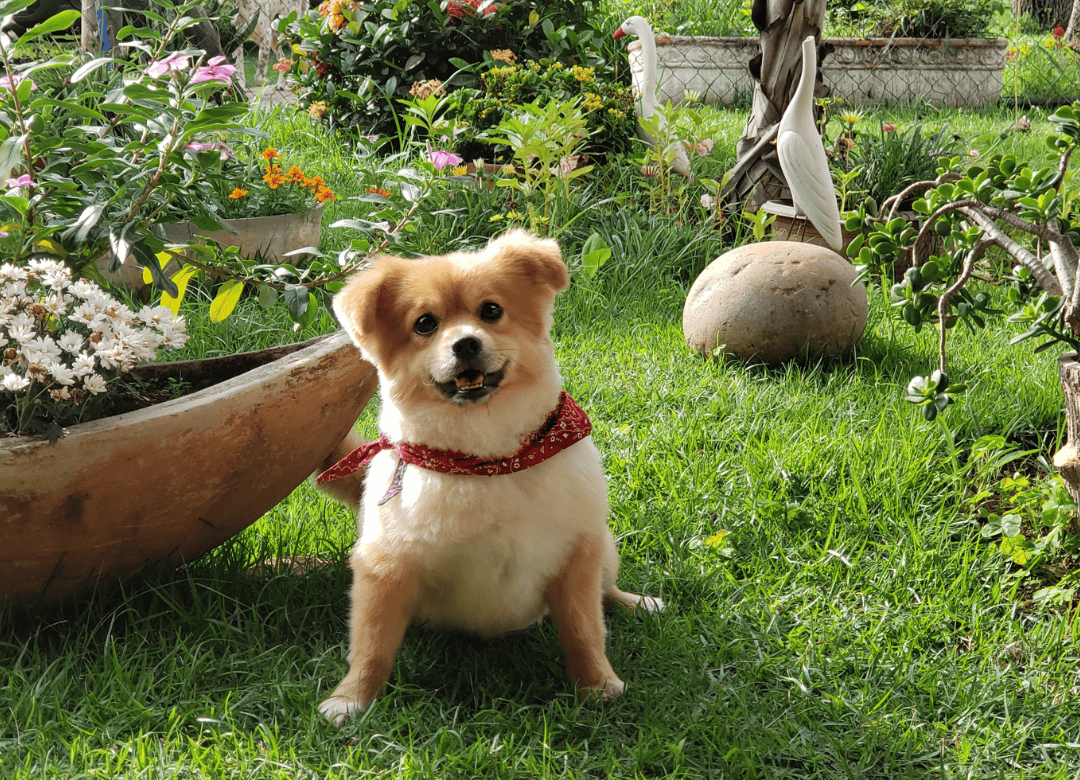
You probably already know that there are many plants that are toxic to pets. If you need a list, the American Kennel Club has a great list of plants to avoid for dogs and pets. Unfortunately, many common yard plants are toxic to pets. The red flags that your buddy is sick from a toxic plant include:
- Appetite loss
- Vomiting
- Diarrhea
- Drooling
Many yard hazards are behavior-linked, such as dogs sniff, nibble, and explore what catches their eye. That’s exactly why I created the 5-Day Dog Budget Bootcamp, where you’ll learn enrichment and training tweaks that reduce dangerous habits and keep your dog safer outside.
However, you might be surprised to learn that the simple structure of some plants or shrubs can be dangerous to dogs and pets. For instance, some plants have pointed leaves and are just the right height for small dogs’ eyes, especially if they are sniffing. Rose bushes also can be a thorny issue for dogs’ and pets’ eyes.
Personally, I learned this the difficult way. One day, I turned my back for a split second, and my dog, Henry, poked his bad eye. We were out of town visiting a family member, but I immediately called my vet for advice. However, if I’d been in town, the poke would’ve been worse, and we would’ve made a trip to the vet or emergency vet. Thankfully, Henry’s eye healed without any issues.
Also, pollen season can be a bit treacherous for those dogs who love to sniff everything and tend to have allergies. I make Henry stay away from the sagebrush when it’s blooming because he’ll get pollen in his eyes. If I can’t resolve any eye issues, he goes to the vet for help. That’s an additional cost I’d like to avoid, and I know Henry would like to avoid the vet visit.
Many common yard plants are toxic to pets — red flags include appetite loss, vomiting, diarrhea, or drooling after chewing foliage.
Springtime Yard Hazards to Watch For
- Emerging toxic mushrooms: Rain and warmth bring mushrooms that are toxic if eaten.
- Increased pests (ticks, mosquitoes): These can carry disease and make outdoor time itchy or dangerous.
- Slug & snail baits: Common in spring gardens, but toxic if ingested.
- Poisonous toads (regional): In some areas, Bufo/cane toads produce a toxin that harms dogs.
2. Lawn Chemicals and Poisons That Put Dogs at Risk
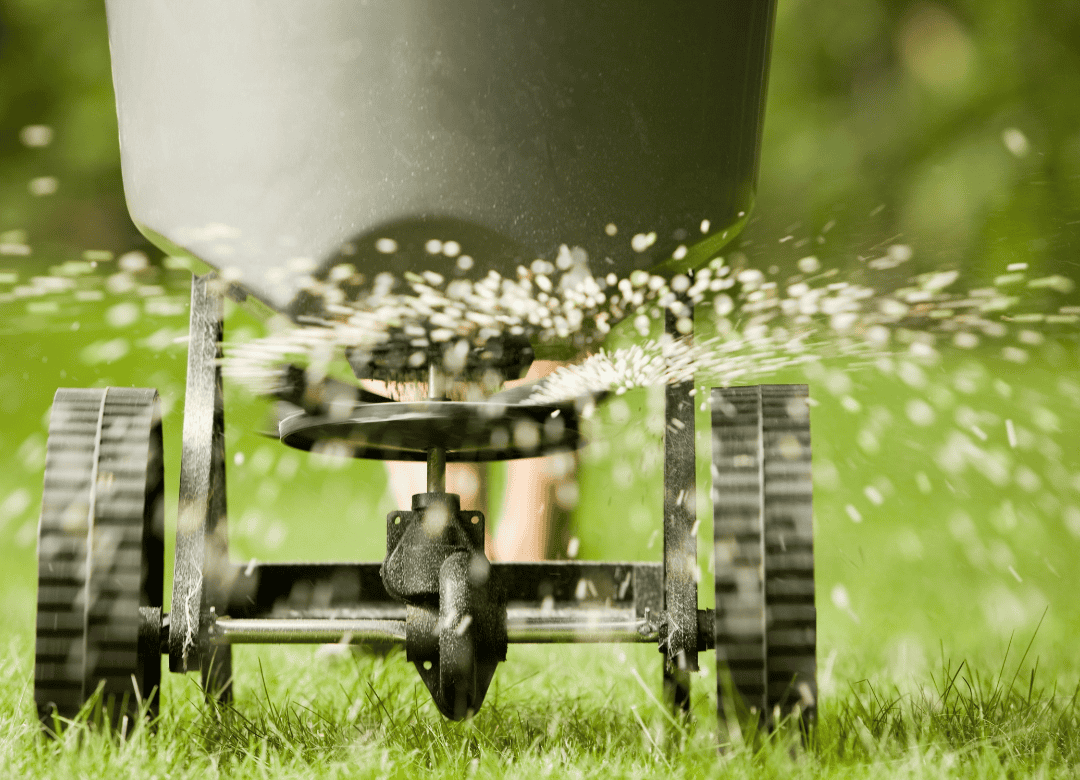
You may be mindful of what you put on your plants and shrubs and where you store your chemicals (if you use them). But if you visit a family or friend’s yard, can you confidently say chemicals are stored properly? Or what if your dog rolls on the grass and then licks his/her paws? Will he be ingesting toxic chemicals? Never assume others take care of landscape and lawn chemicals in the same way you do in your yard. Always ask before you let your pup explore any yard.
Note: Always safely store fertilizers, pesticides, rodenticides, and lawn chemicals securely out of reach of your dog. Sadly, your furry friend can absorb toxins through paws and then ingest them while grooming.
Do you think your home is dog safe? My guide to the top hidden pet poisons may surprise you.
3. Fence Gaps Leading to Escapes
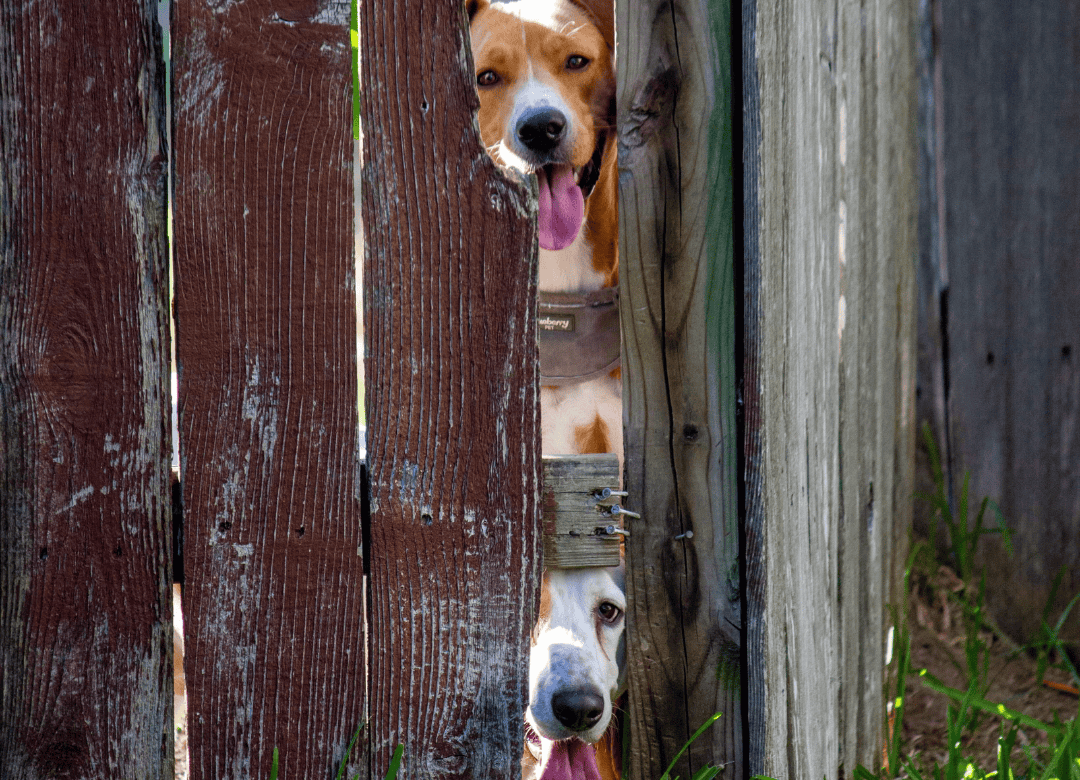
This seems like an easy one to check. You simply make sure that there’s fencing and it goes completely around the yard, right? But you also need to make sure that the fence is in good order. This means it’s strong enough to withstand your dog or a dog from the other side of the fence jumping on it.
Again, I learned this lesson the hard way. A few years ago, Henry and I were visiting his favorite small puppy friend. They were playing in the backyard. Suddenly, the neighbor’s dogs broke through the fence and pulled Henry through.
Specifically, the problem was that there was a knot in the fence, which weakened the fence’s strength. The neighbor’s dogs used it as a weak spot to look through and bust down the fence. This is why Henry has a bad eye. But the good news is he survived. I think it knocked a few years off my life. I now make sure fences are well-maintained and secured. However, it was a very stressful ordeal and ultimately pricey for the neighbor’s homeowners’ insurance. Although I had to go to small claims to receive payment.
Another aspect of a yard fence is that it needs to be tall enough to hold your dog, especially if your dog likes to jump. This means also in the winter when the height may shrink as snow piles up.
Many years ago, my family had a border collie named Punky. She could clear a 6’ brick fence from a standing position. In this case, it’s a matter of knowing your dog’s skills and keeping an eye on your dog if you’re visiting a friend’s dog yard.
Want the best tips for curtailing fence-jumping dogs? My guide to easy dog fence jumping solutions shows you exactly how to keep your pup safe.
4. Water Features and Drowning Risks
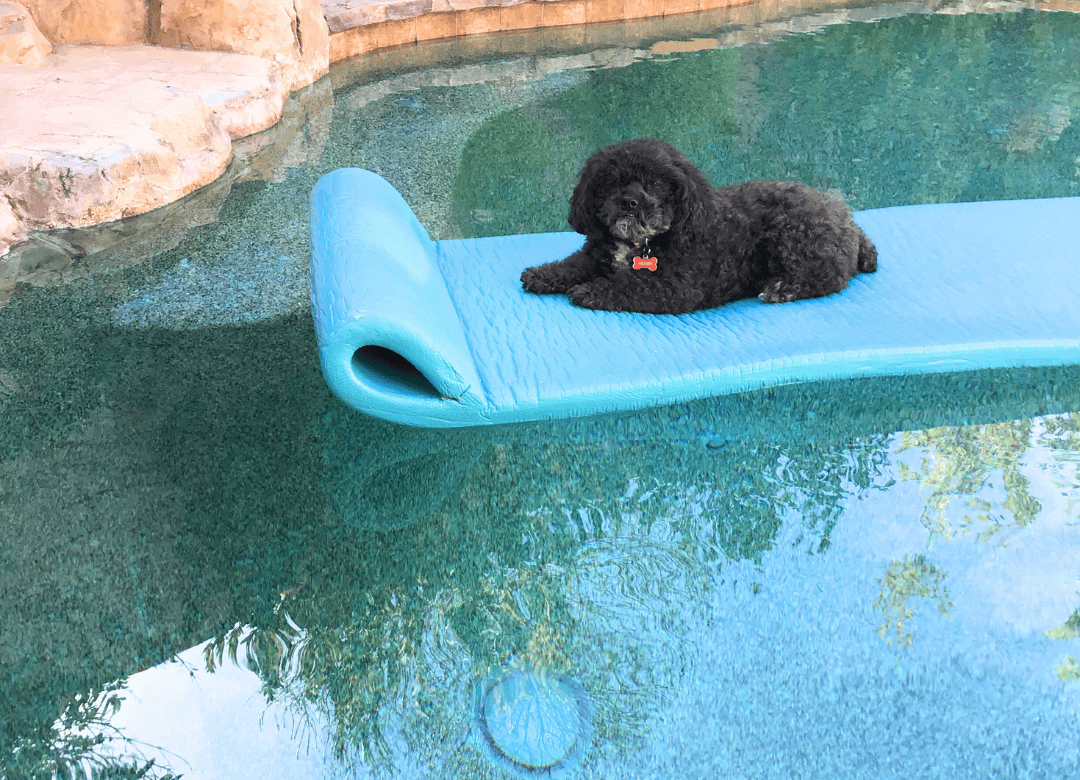
While most dogs are great at swimming, some are a bit scared of it. If you have a pool or large water feature in your backyard, watch your dog like you would a child. It’s always best to be safe. When in doubt, put a life vest on your dog.
While Henry is a great swimmer, he’d prefer to float. I guess that’s part of his “King Henry” persona.
However, some water features can actually act as a watering hole, which is a great idea. My guide to great dog-safe water features tells you everything you need to know. I know Henry always needs extra water when he’s hard at work playing in the yard.
5. Sharp Yard Tools and Equipment Left Outside
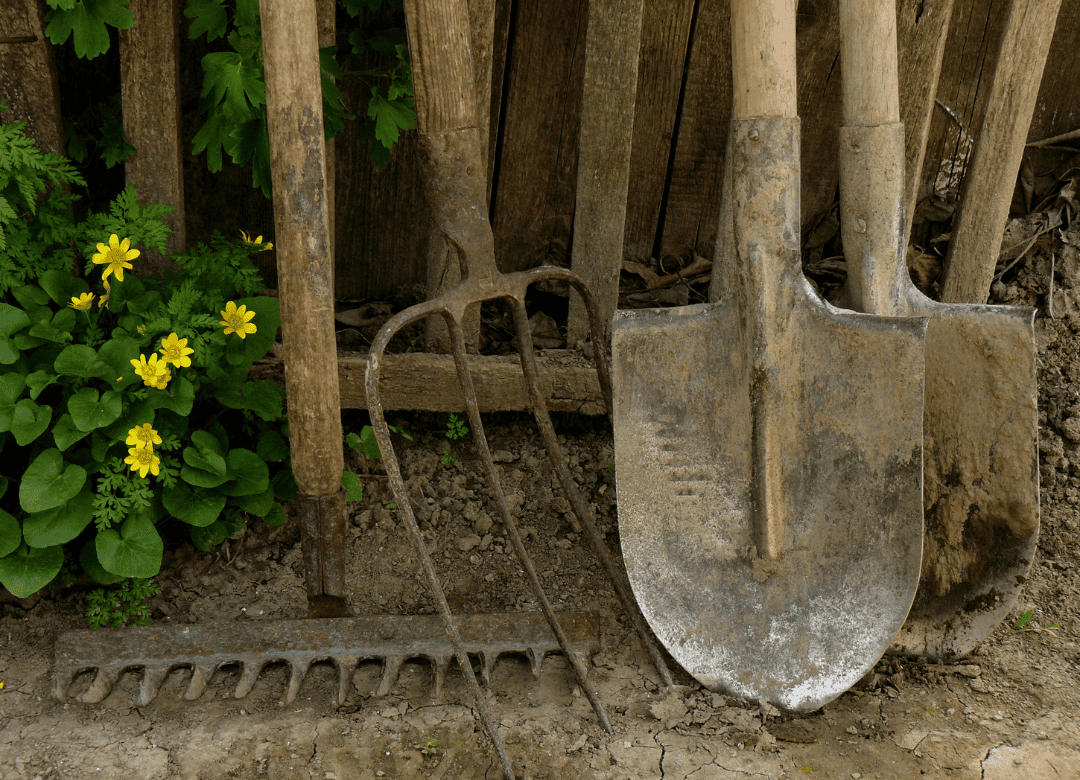
My grandfather was a stickler for taking care of tools of all sorts, including yard tools, and putting them away properly. You may not be the same. Or you may visit a yard that doesn’t adhere to this philosophy. Yard tools can be sharp and pointy. If you’ve ever accidentally stepped on a rake hiding in the grass, you know it’s no fun.
Thus, if you have a dog who likes to chew, then your expensive tools can soon be a faint memory of what they used to be, or you may have to invest in new tools for your friend. It’s always best to do a quick search before letting your dog loose in the yard.
6. Chipping Paint, Treated Wood, Paint, and Building Materials
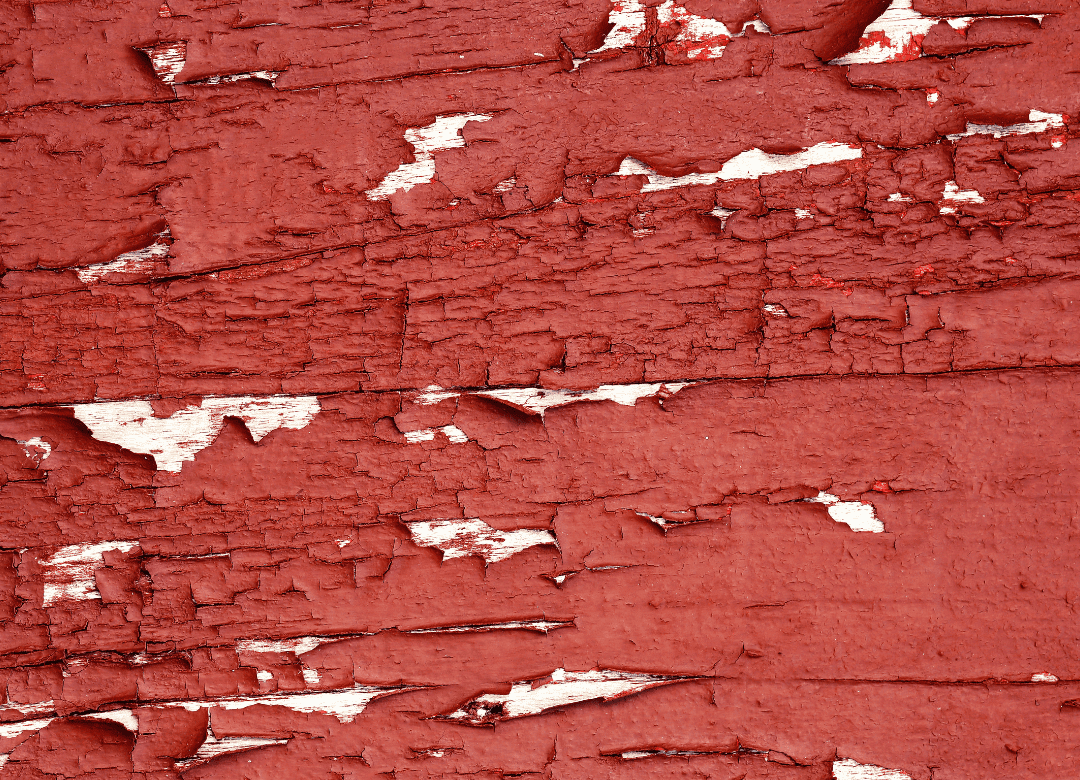
I know you’re thinking this is just weird. My dog won’t eat paint. Well, you’d probably think the same thing about your dog eating poop until you saw it. Dogs can sometimes do the strangest things when they get bored or if they are not entertained to their full energy level.
The problem with a dog eating chipping paint (even if you’re prepping to paint your house) is that the paint chips could be lead-based. Besides, dogs simply weren’t made to digest paint chips. Either are humans. This could mean a pricey vet visit.
7. Broken Fences and Escape Gaps
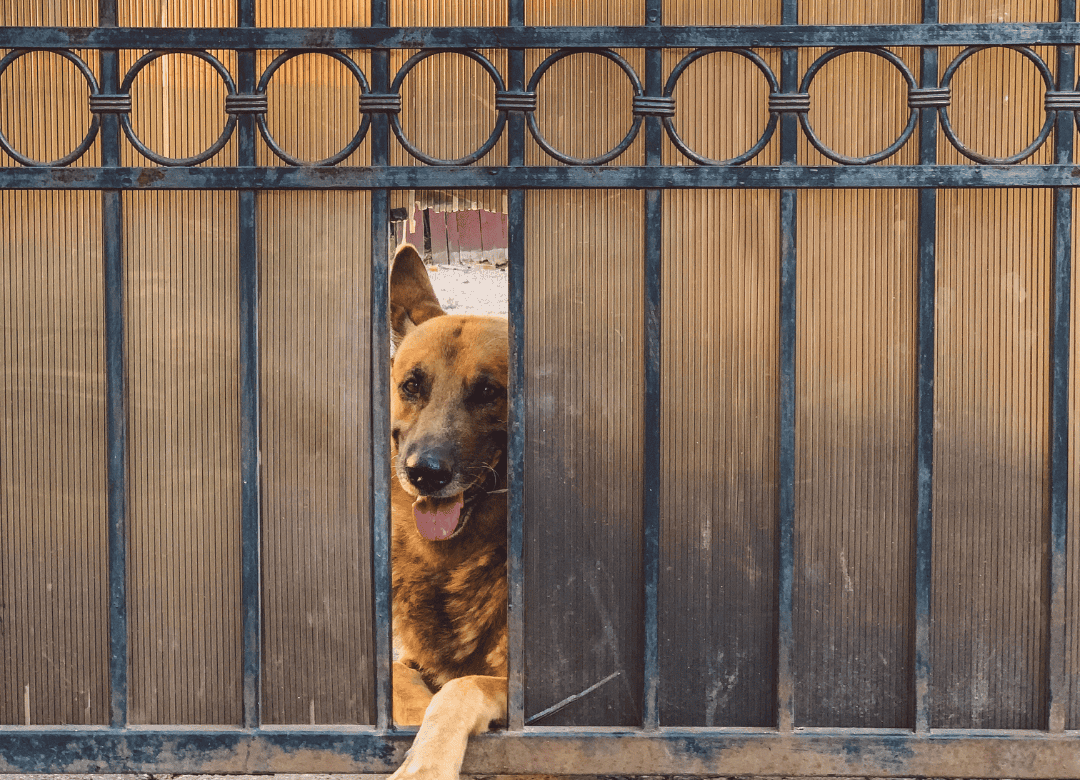
This could seem like a silly one to include on the list. However, it’s a critical one. If you have anyone who has access to your backyard, then it’s super important. You always need to check that the gate or gates are closed before you let your dog loose in your yard or a friend’s yard.
Once again, I learned this lesson the hard way. I was visiting family and waited for the landscaper to leave, and then let Henry outside for a couple of minutes. I went to grab a bottle of water before joining him. Within those few seconds, he was gone. The landscaper left the gate open. Thankfully, he was waiting at the front door for me. Now, I check everything.
Are you worried about your dog turning your yard into a hole pit? My guide to easy dog digging solutions reveals why they love digging and how to solve it in a good way.
8. Exposure Leading to Stolen Pets
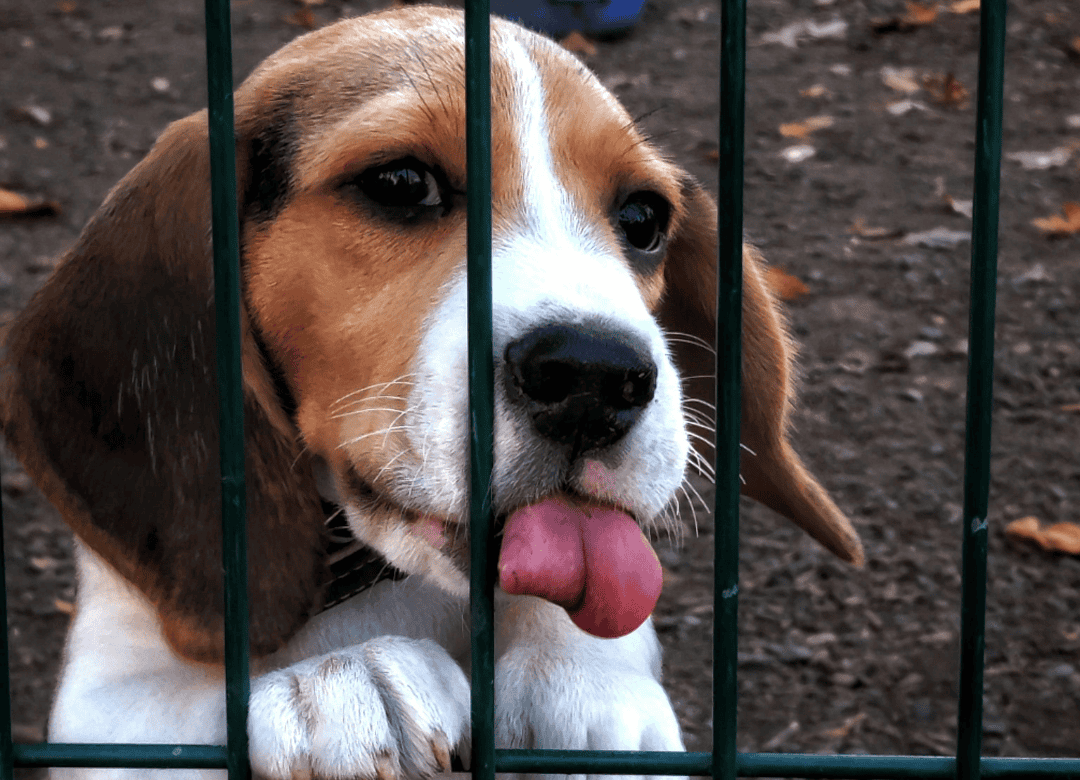
I know this is another weird-sounding hazard. Let me explain. If you live in a very populated area or you are visiting a highly-populated area with your dog, then a backyard that is exposed to the public, even if it’s gated and fenced, means heavy supervision. Unfortunately, some dogs are considered more valuable and are prey for some people to steal for a multitude of reasons.
As such, it’s not uncommon that dogs, who are friendly, are snatched from their own dog yards, especially when the yards are visible to the public. Cameras can help detect the intruder, but it can still be difficult to retrieve the “dognapped” pup.
Of course, having your dog microchipped may help as well. But mostly, you being present with your dog will deter the person from invading your yard for the easy grab. Needless to say, making your dog yard less visible to the public also helps. It’s the old out-of-sight, out-of-mind method.
One great tip for keeping your dog is making sure your pup is microchipped. Our guide to microchipping your dog explains why it’s a good idea, how to chip your pup cost-effectively, and how to transfer a chip to you.
9. Mulch, Gravel, and Ground Cover That Dogs Can Swallow
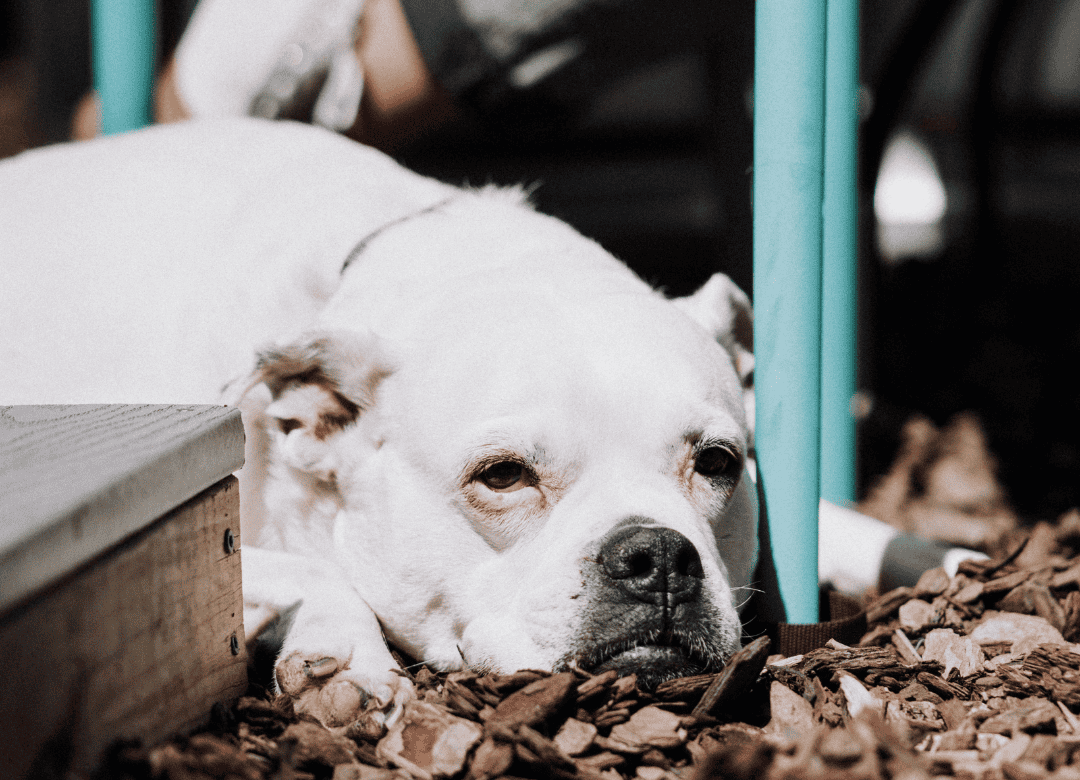
You may have decorated your backyard with gravel to save on water and cut down on the mud. This is a great idea! However, if you have a dog that likes to chew or eat whatever is around, you’ll want to pay close attention. Sometimes I think dogs are part goat. If you have a goat-type dog, you may even want to invest in a dog run to quarantine your dog from these dangerous pebbles or bark areas. Ingesting pebbles could lead to an emergency veterinarian trip or worse.
Not all mulches are created equal. Our guide on dog-friendly mulch walks you through what to look for and what to avoid.
10. Garden Hoses and Choking Yard Hazards
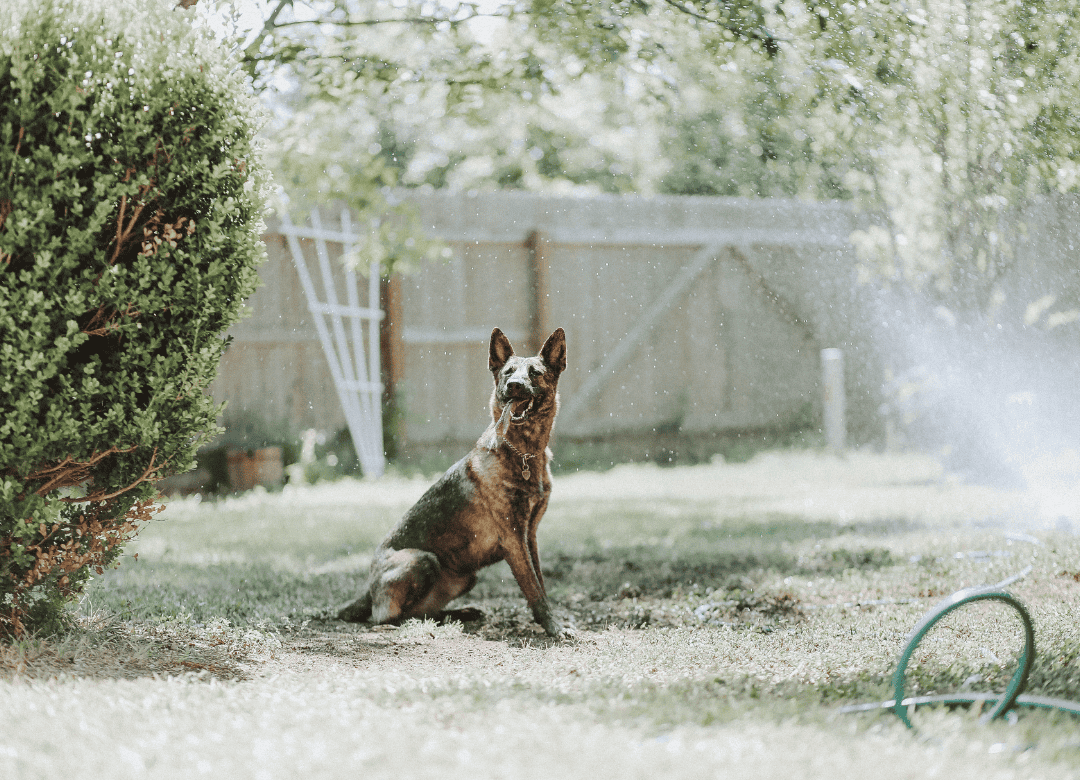
If you have a dog who is high-energy and gets bored easily, make sure you put your garden hose up and out of the way. This, too, could end up as a chew toy. In this case, it would be a good idea to invest in some heavy-duty chewy toys rather than replace your expensive garden hose.
11. Storm Drains Yard Hazards for Nails
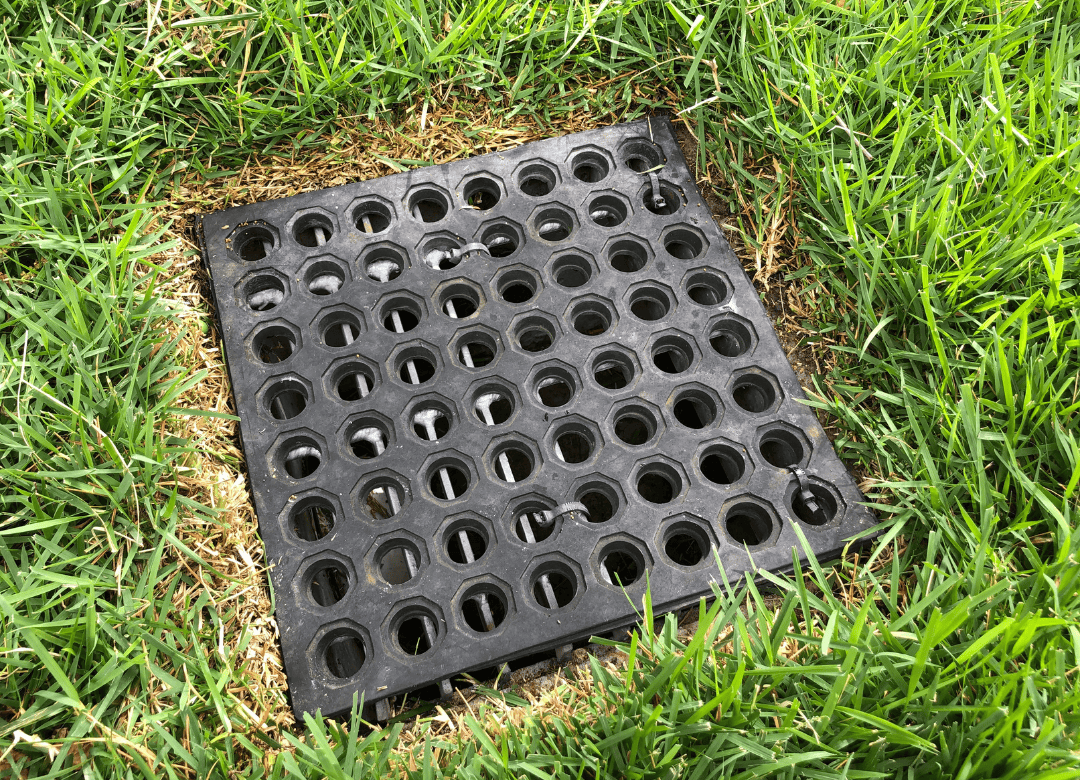
Some yards have storm drains or even French drains. These are great for protecting your home and yard. However, if you have a curious pup, paws or nails could get stuck in these drains.
For example, I have a couple of French drains on our property. Henry may sniff them as he runs by, but he never digs at them or finds them interesting. If he did, I’d train him to avoid the areas.
12. Gutter Water and Standing Water Yard Dangers
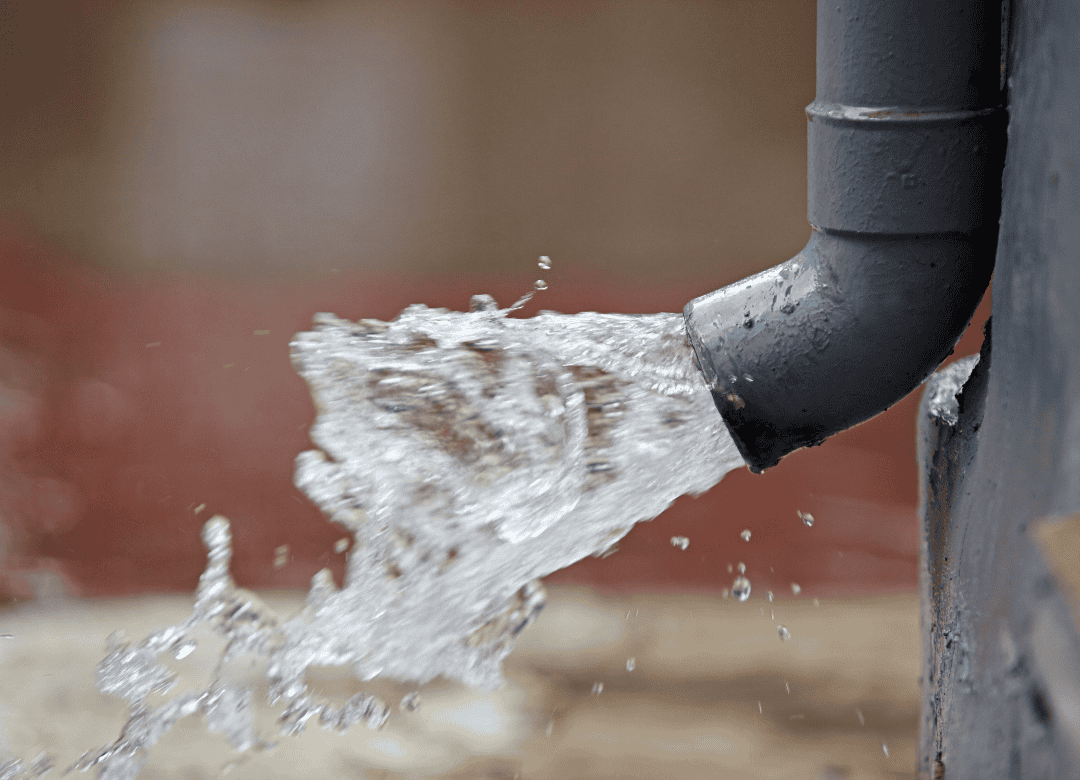
While you may think that it’s fine for your dog to drink water gushing out of your downspout, it might not be safe. Specifically, if your roof has composite shingles, it could lose material in rain or snow.
Additionally, if your downspouts gush with water, your pup could choke on leaves, leaf particles, various bugs, or shingle bits. I always have the standard for Henry that if I wouldn’t drink it, he won’t either. That avoids a lot of concern and emergency vet visits.
13. Trash, Compost, and Food Scraps in the Yard
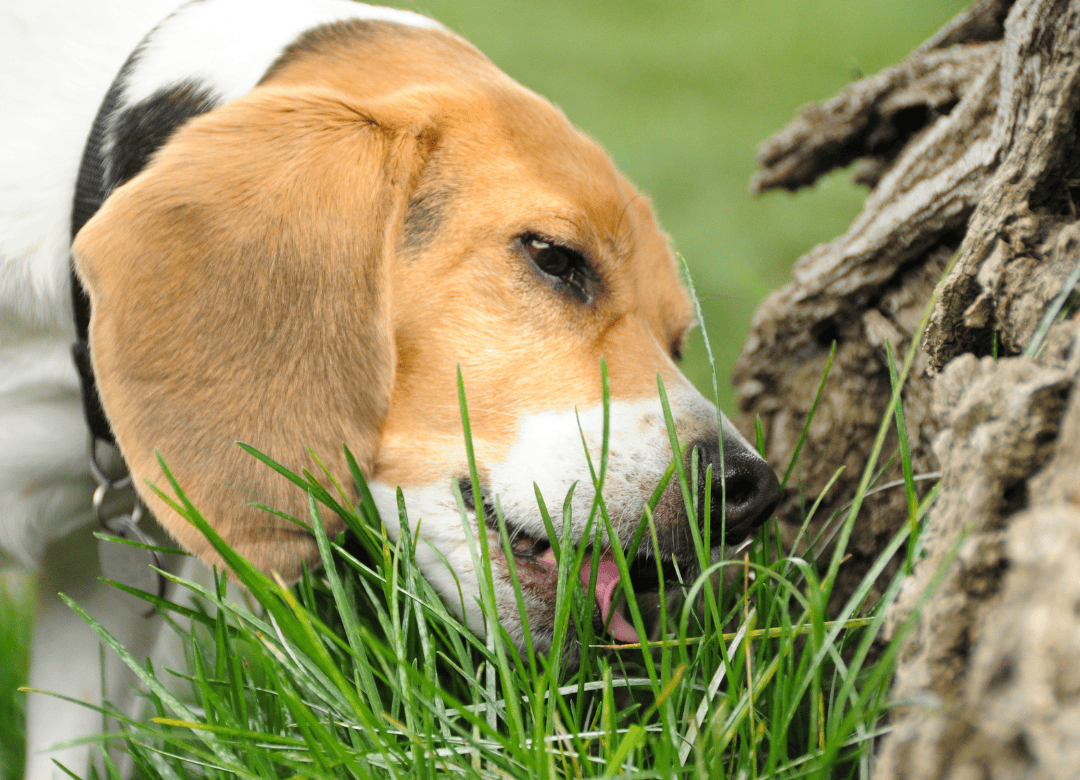
It’s always amazing to me what the wind will blow into the yard. Where it all comes from, I have no idea. However, some trash can be hazardous, such as plastics and some pieces, or even empty chemical containers.
Of course, if you or your neighbors are in the middle of a construction project, then you may find staples, nails, broken glass, and even shingles in your yard. All could end with a pricey vet visit.
14. Destroyed Toys Yard Risks
If your pup loves toys, they may like to carry them outside. It can be fun for your dog to play with a favorite toy outside. But if that toy becomes shredded from the sun, wind, or play, then the stuffing can become a choking hazard. That could mean a pricey vet bill.
15. Border Fencing and Sharp Yard Edges
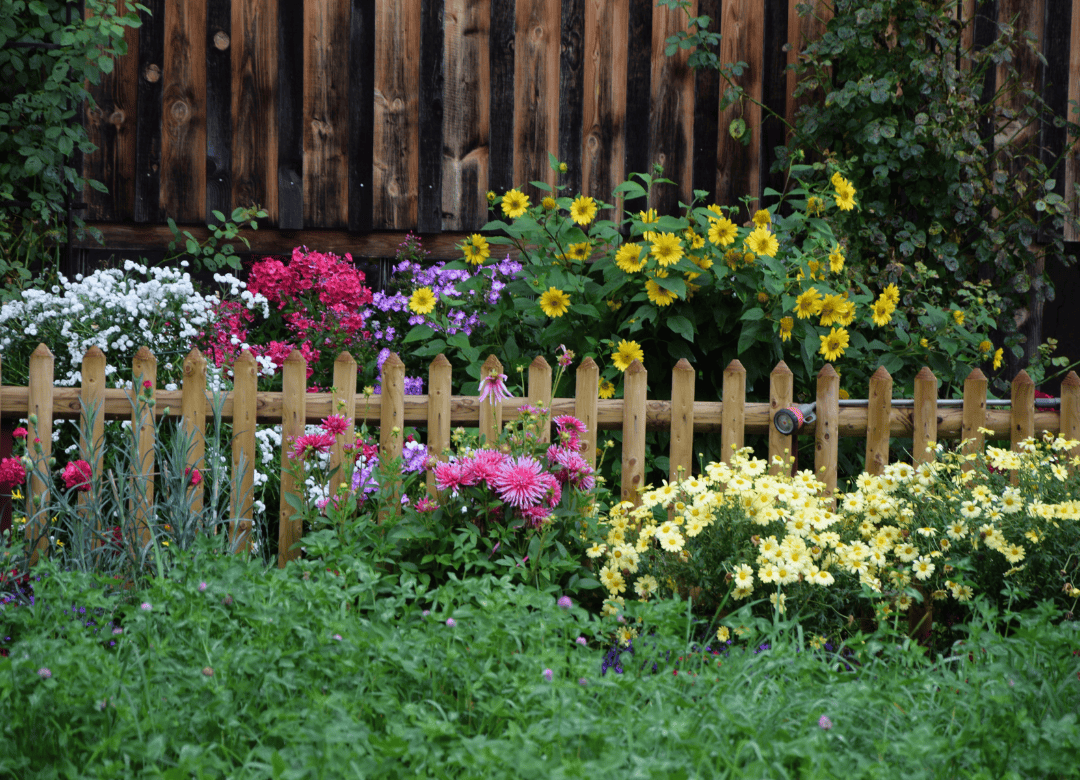
While border fences can be used to restrict areas from your fur kid, they can also be dangerous. For example, if your buddy sees a bunny on the other side of the border fence, they may try to jump the fence. This, in turn, can cause your pup to get tangled in the fence and hurt.
It’s best to train your pup to ignore these areas, use a safer option like bricks or cinder blocks, and always keep an eye on your pup. Don’t forget the borders and sharp areas in a yard you and your pup may visit. Watching out for a sharp edge or short border fence can prevent a pricey vet bill.
16. Wildlife and Pests in Your Yard
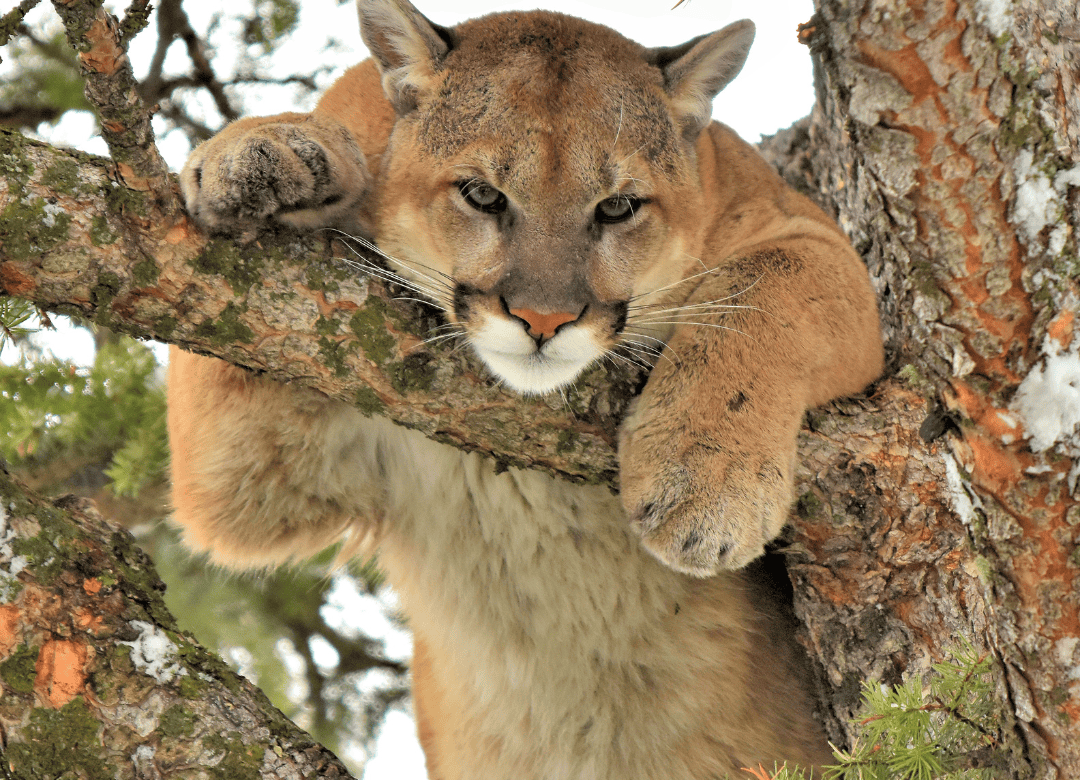
Even if you have a secured yard, some predators can still get into your yard.
For example, in my area, there are a lot of mountain lions, lynx, coyotes, bears, and raccoons. All are good at maneuvering a secure fence with ease.
Since most of the predators are nocturnal in my area, I don’t let Henry go far as the sun begins to set or before the sun fully rises each day. Additionally, I watch for wildlife poop and carcasses. They could cause a GI or choking issue.
Thankfully, Henry doesn’t seem to care for other poop besides peeing on it. I suppose it’s his way of reclaiming the area.
Also, make sure you look out for uninvited snakes and spiders. Some snakes and spiders can be very dangerous for humans and pets, such as rattlesnakes, black widows, and brown recluse.
Have you been wondering if you should get your dog a snake venom vaccine as a preventive measure? My guide about the rattlesnake vaccine will walk you through all the pros and cons of this shot.
Do you wish you had a step-by-step plan to cut dog expenses while preventing vet bills and backyard emergencies? My Stop The Dog Money Worry Book walks you through everything you need, including behavior solutions, practical yard fixes, and real-world strategies that keep dogs safer and saves money in the long run.
If you want free tips sent straight to your inbox, join my 5-Day Dog Budget Bootcamp. It includes five days of budget-friendly dog care tips that won’t compromise your pup’s health or happiness.
How does a safe dog yard help with my dog’s expenses?
You might not ever think of what you avoid as a cost savings. But it certainly can be for you, your family, and your fur kid. With this in mind, consider the possible cost savings below.
| Ingesting toxic plants | $547 |
| Eye injury | $100-3,800+ |
| Chemical poison | $25-5,000+ |
| Missing dog | $100-2,000 |
| Drown dog | $1,500-5,000 |
| Puncture wound | $250-5,000 |
| Lead poisoning | $750-4,000 |
| Obstructions | $3,000-4,000 |
| Replacing the garden hose and tools | $100+ |
FAQs
Q: What common backyard plants are toxic to dogs?
A: Plants like azaleas, lilies, sago palms, and certain mulches can cause serious illness if ingested.
Q: Can yard chemicals hurt my dog if applied recently?
A: Yes! Such yard items as pesticides, herbicides, rodent baits, and fertilizers can be harmful. Keep dogs away until safe levels return according to label directions.
Q: Should I worry about extreme weather in my yard?
A: Extreme hot or cold conditions can harm your dog, from heat stroke to frostbite. Provide shade, fresh water, and monitor time outside.
Related articles:
- A Dog Friendly Backyard On A Budget
- Easy Dog Yard Digging Solutions
- Easy Dog Fence Jumping Solutions
- How Does Dog Safe Mulch Save Money?
- Shady Paws! How Dog Shade Saves Money!
Just say no to dangers in your dog yard
Dog yards are a fun place to let your dog be a dog, as long as you account for the hidden dangers. While some hazards may seem obvious, like chemicals, others are rather obscure, such as chipping paint.
Whether you’re a yearly deep cleaner or not, no dog parent wants to end up in the emergency vet waiting room. I know I’m always on the lookout for any hazards that may have slipped by me and snuck into our yard. I rest easier knowing Henry can play safely in his yard. I bet you will as well.