
If another dog attacks your dog, your adrenaline kicks in fast. In the moment, it can feel impossible to think clearly. But knowing what to do beforehand can help protect both you and your dog.
In this guide, I’ll walk you through how to break up a dog attack safely, when to seek emergency vet care, what documentation to collect, and what legal or insurance steps may come next.
Unfortunately, I learned this firsthand after my rescue dog Henry was attacked by two dogs. While the experience was traumatic, it taught me important lessons I hope can help other dog parents.

If another dog attacks your dog, focus on getting to safety first. Avoid grabbing collars with your hands, use barriers or loud commands if possible, seek veterinary care immediately, and document everything afterward including photos, vet bills, and witness information.
Budget Tip: Dog attacks can become extremely expensive very quickly, especially if emergency surgery is involved. Document everything immediately, including photos, vet bills, witness information, and communication with the other dog owner. Good records can make reimbursement much easier later.
Dog Attack Emergency Checklist
- Get yourself and your dog to safety
- Avoid grabbing collars with bare hands
- Check your dog for injuries
- Seek emergency veterinary care
- Take photos of injuries
- Gather witness information
- Exchange contact details
- Report the attack if necessary
- Save all vet bills and documentation
What To Do During a Dog Attack

Above all, avoid physically placing yourself between fighting dogs whenever possible.
Stay As Calm As Possible
I know it’s not easy, but try to remain as calm as possible. It will allow you to think more clearly and act as effectively as possible.
Avoid Grabbing Collars With Your Hands
Above all, never reach into the middle of a dog fight or grab a collar. However, if your dog is still being attacked, you’ll need to remove the attacking dog in some manner.
Use An Object As A Barrier
In this method, you can grab a trash can lid, a piece of plywood, an empty baby stroller, a grocery cart, or an umbrella to push the aggressive dog away from your dog.
Try Loud Verbal Commands
With this method, you use basic commands such as “NO!” “SIT!” “LET IT GO!” or “GO HOME!” to get the attacking dog to stop. If the attacking dog is trained at all, he or she may stop attacking your dog.
Distract the aggressive dog
Try using what you have at hand. This can include:
- Whistle
- Air horn
- Dog treats
- Car horn (you may need to get someone to do this for you)
- Throw a blanket or jacket over the aggressive dog
Use Deterrent Spray If Needed
This method includes items such as:
- Spray shield
- Pepper spray
- Mace
- Bear spray
Keep in mind that in some areas these sprays will be considered a weapon and you’ll need a license to carry them.
Also, always be mindful of the wind if you decide to use one of these options. You can lessen the blowback on these types of sprays with gel options.
Distilled Vinegar Spray
I’ve recently learned about distilled vinegar. I believe this is often a much better option when dealing with an aggressive or even an off-leash dog.
Specifically, when you aim the spray bottle with distilled vinegar at the attacking dog’s nose, it will immediately turn them.
But it won’t hurt you if you are downwind.
To use this method, you’ll simply want to grab a spray bottle or Super Soaker, fill it with distilled vinegar, attach a loop of velcro to the bottle and a loop to your belt.
You’ll have easy access if needed, yet your hands are free.
Note: Add a few drops of food coloring to the bottle or Super Soaker. This will mark the dog and not allow the dog owner to say the dog wasn’t at a certain location. The dye doesn’t hurt the dog. But it’s not easy to wash off.
Get Your Dog To Safety
Your focus is about getting your dog away from the aggressive dog and to a safe spot. Then you can begin evaluating your dog.
Exchange Contact Information
If the aggressive dog owner is at the scene, ask them for their contact information.
Make sure you get the owner’s
- Name
- Phone number
- Aggressive dog’s vaccine records
Also, I recommend taking photos. Try to capture
- The dog
- Your injured dog
- The dog owner
- The vehicle
- The license plate number
- The overall scene
Or you can ask a friend to do this for you while you tend to your dog.
What If The Dog Owner Isn’t Present during The Dog Attack?
Unfortunately, this can happen more times than anyone cares to imagine.
- Get photos of the dogs (the attacking dogs and your pup
- Ask bystanders for photos
- Get bystanders’ contact info
- Take photos of the area
- Call animal control
How Henry’s Dog Attack Happened
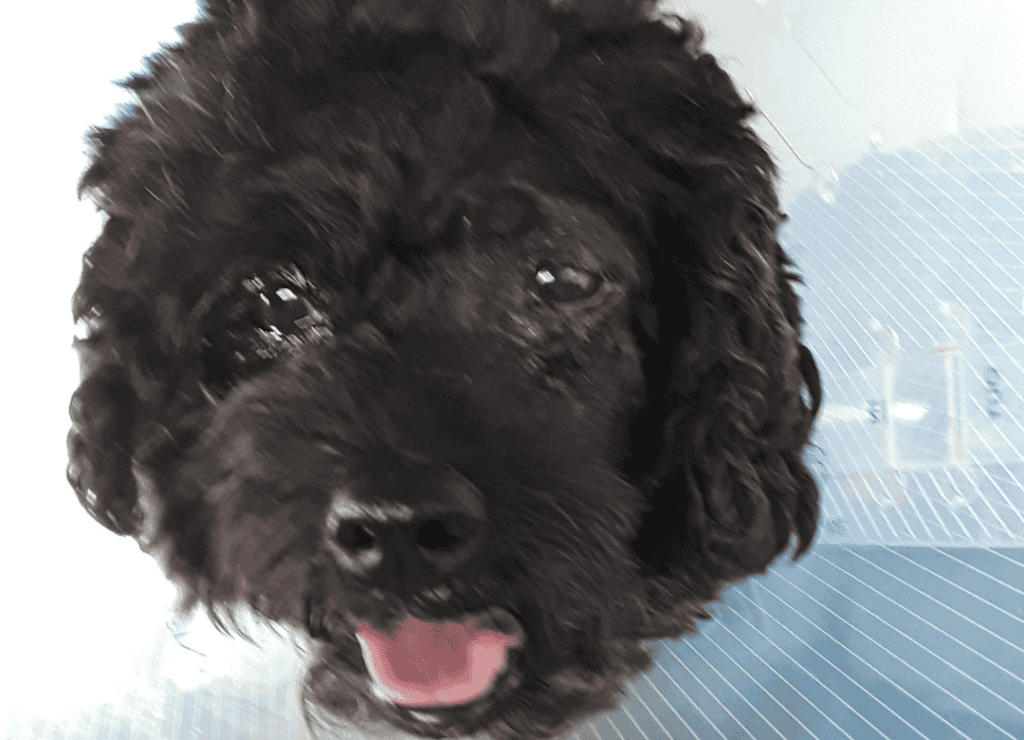
Henry and his puppy playmate were enjoying playing in her backyard.
Meanwhile, my friend and I watched out the window.
Suddenly, we saw the fence between her yard and the neighbor’s yard break.
Henry was pulled through the gaping hole.
I rushed to the backyard as if shot from a cannon.
Amazingly, he broke free and headed inside within seconds.
I swooped up my friend’s small puppy and closed the doggie door.
Then the trauma began.
When I first accessed Henry after he was attacked, I didn’t see much.
He was lying on the kitchen floor, and I couldn’t see him well.
But then I picked him up, and I immediately saw his dog bite injury.
Actually, injuries.
His eyelid was severed.
It was a very severe injury.
My heart skipped a few beats.
I felt for any other bodily injury.
I found puncture wounds on his neck and cheek.
Yep, a neck bite.
Otherwise known as kill wounds.
I swallowed a huge lump in my throat at that discovery.
I knew he’d barely escaped.
But I still didn’t know if he’d survive or how his life would look in the future.
I headed to the emergency vet.
How To Check Your Dog For Injuries After An Attack
Once you have safely removed yourself and your dog from the dangerous scene, you’ll want to assess your dog.
- Is your dog bleeding?
- Does your dog have a limp?
- Is there any area that is swelling on your dog?
- Are there any sensitive areas on your dog? (Gently touch all parts of your dog’s body, if possible.)
If yes to any of these or your dog is unresponsive, vomiting, or acting abnormally, seek immediate veterinarian attention.
Signs Your Dog Needs Emergency Vet Care After an Attack
There will be red flags that you need to take your dog to the emergency vet immediately. They include:
- Puncture wounds
- Shaking
- Limping
- Tender or sensitive areas
- Swelling anywhere
- Breathing changes
- Hidden injuries (trust your gut, and when in doubt, have your dog checked out)
- Shock (you may not know, and that’s why it’s good to see a vet)
- Eye injuries
- Internal injuries (again, you’ll need a vet to look at your dog)
Honestly, after any attack, it’s best to get your dog to a vet. A lot of injuries you can’t detect with your eyes.
What If My Dog Seems Fine After The Attack?
I always recommend erring on the side of caution and visiting your vet.
You want to make sure there are no internal injuries or any bodily injuries you missed.
Can a Dog Be Traumatized After An Attack?

Absolutely!
You may notice your dog being a bit normal. This can include:
- Fearfulness
- Sound sensitivity
- Leash reactivity
- Anxiety
- Clinginess
- Avoiding dogs
Henry became more sensitive to certain sounds after the attack, even though he still loves other animals.
Who Pays the Vet Bills After a Dog Attack?
This can be a bit tricky. What are your legal rights?
When Henry was attacked in my friend’s backyard, the fence wasn’t her fence.
But, we invited guests to her house, and I had a reasonable expectation that I and my possessions (legally that is Henry) would be safe during this visit.
Under the laws of my state, liability would fall to both her and the neighbor.
I felt like the vicious attacking dogs and the neighbors not keeping the fence well-maintained were mostly at fault.
Always Bring A Witness
Bring a witness whenever discussing reimbursement or liability after a dog attack.
Even when people initially seem cooperative, situations can change later.
Should You Report a Dog Attack to Animal Control?
You’ll want to think of it as a public health alert when you file the report.
I called and filed a written report on the attack.
It took months for the animal control officers to conduct interviews with the homeowner and my friend.
By this time, the dogs had been moved to a different location.
But in most cases, animal services do a more prompt evaluation of the dogs and environment.
In general, a dog bite claim to animal control will be taken seriously.
If the dog is of a certain breed or mixed breed, it will be taken more seriously.
Your goal is simply to have a paper trail of the dog attack in case you should need it later.
Or if someone else should need it for a later aggressive behavior act by the dog.
Can Homeowner’s Insurance Cover a Dog Attack?
This will depend on a lot of factors. Again, this is what I learned.
Where Did The Attack Occur?
If the attack occurred on the aggressive dog’s property or they damaged your adjoining property, you may have some precedent for a claim.
In Henry’s case, the attacking dogs broke down their fence and pulled Henry through to their side of the property.
The attacking dogs never crossed onto my friend’s property.
But they viciously pulled Henry’s head onto their property.
But if Henry had initiated the cross onto the property, it would’ve been a different story.
Do You Have Any Witnesses?
This could even be a security camera. Those can be a great tool! Especially when they have a date and time stamp.
In Henry’s case, I had my friend as a witness.
Was The Attacking Dog Running Loose?
If the attack occurred in an area where dogs are allowed to be off-leash, that will need to be considered. However, aggressive dogs still need to be controlled.
Also, if the attack occurred in a leashed area, that’s a different story. My city has leash laws. Yours probably does as well.
In Henry’s case, the attacking dogs were in the neighbor’s backyard.
When To Consult An Attorney
As I tried to grapple with Henry’s case, I consulted different attorneys.
Here’s the best explanation I ever received on whether homeowners’ insurance can be used or not.
Remember, your dog is legally considered a material item.
Example:
For an easier comparison, if you are invited over to your friend’s house, park in her driveway.
You’d have a reasonable expectation that your car would be safe.
But, your friend had neglected her big oak tree in her front yard for years, and it fell on your car, she could claim the damage on her homeowner’s insurance.
In Henry’s case, the attacking dog’s homeowners could file a claim on their homeowners’ insurance (even though the dogs were only staying there temporarily).
Also, the dogs’ owner (the homeowner’s daughter) could file a claim on her insurance.
I had a reasonable expectation that I and my possession (Henry) and I would be safe during our invited visit.
What If Homeowner’s Insurance Refuses To Pay?

Insurance companies are around to make money. Not pay out claims (regardless of the premiums you pay).
Most insurance companies (I don’t care which one you’re with) will argue about any payment.
That doesn’t mean they have a legal ground for the denial.
That is just their internal policy.
They don’t want to pay unless it’s more cost-effective to pay.
But you do have steps to take to force payment.
Send An Attorney Demand Letter
Since the homeowner didn’t pay, I took the next step, which was a “demand letter” from an attorney.
This basically is a letter from an attorney stating that the incident occurred. It includes information such as:
- Dogs are liable
- Homeowners and dog owners are liable (with legal references).
- An invoice indicating how much is owed
- A copy of the expenses
- A date for payment to be made
- Next steps that will be taken.
In my case, my next step was small claims court.
Contact The Homeowner’s Insurance Company
I was able to get the insurance information.
So, I contacted them directly.
They denied my claim for “unspecified reasons”.
I clearly stated the law.
They were uninterested.
They didn’t want to pay.
File A Complaint With Your State Insurance Department
I even filed a complaint with my state’s division of insurance.
This put a mark on the insurance company.
Basically, the insurance company wants a good standing with each state.
The more complaints an insurance company has filed with a state’s division of insurance, the lower the rating with that state.
If that rating is low enough, a state could deny them the right to practice within that state.
The insurance division reviewed my case and said that the insurance company should pay, but they couldn’t make the company pay.
They recommended my last resort.
Consider Small Claims Court
Honestly, I was doing everything in my power to avoid going to court.
It was my last resort.
I would’ve preferred a root canal without anesthesia.
But I was put in a position where I had no choice.
So, I filed my case, and the homeowners where the aggressive dogs stayed, although temporarily, were served.
Prepare For Your Court Date
I took all my documents with me to court (animal control report, photos, bills, eyewitness statements).
I had my witnesses.
The judge made no decisions on the court day.
Receiving A Judgment
The judge issued his ruling about a week later.
He ruled in my favor and said the attacking dogs’ were on the homeowners’ property and thus, they were at fault.
The fence should’ve been maintained, but it was neglected.
They had to pay Henry’s bills.
You’d think the fight would be over here, right?
Nope.
Collecting Payment
Here’s where it got even trickier.
Insurance doesn’t like to pay. Even when a judge rules they must pay, they don’t want to pay.
So, the insurance company was late paying. That meant, in my state, they owed me interest.
But I had to hound them for another month for the interest. It wasn’t much. At that point, it was the principle of it.
How Can I Find Legal Help For My Dog Attack?
I know it’s overwhelming trying to figure out the law and what you should or can do.
The laws of each state can vary a bit. But you can still find help.
In every state, there’s a Bar Association.
Part of each bar is a free assistance.
Call them and ask for a pro bono attorney, a free legal clinic, or which lawyers will provide a free consultation.
Can A Dog Owner Tell Their Insurance Company To Pay?
Again, this could vary by company and state. It is absolutely possible to have an honest property owner make an insurance company do the right thing. I’ve done it.
You do the right thing simply because it’s the right thing.
Related Dog Safety Articles:
- Is Your Dog Aggressive?
- Effectively Calm a Dog: Surprising Solutions!
- How to Find the Best Veterinarian
- Easy Dog Emergency Vet Visits Tips
- Keeping A Dog Safe With Off-Leash Dogs
FAQs About Dog Attacks
What should I do immediately after a dog attacks my dog?
Get your dog to a safe location. Then get the dog owner’s phone number and take as many photos of the dogs and the area as possible. Most importantly, get your dog to a vet for an evaluation. Even if you don’t see injuries, there can be hidden ones.
Should I take my dog to the vet after a dog attack, even if they seem fine?
Yes! Often, your dog may be in shock and not exhibiting injuries. Also, a lot of dog attack injuries can be internal. It’s always best to get your dog checked out by a vet after a dog fight.
Can a dog have internal injuries after a fight?
Absolutely! You might not be able to see the injuries, but they can still exist. It’s always best to get your dog looked at by a vet after an attack.
Who pays the vet bills after a dog attack?
It depends on who’s liable for the attack. If you aren’t certain, contact a lawyer with expertise in dog attacks in your area.
Should I call animal control after a dog attack?
Yes. You want a record of the attack in case you need it for future court actions. Also, a record of a problem dog or dog owner can help another dog parent.
Can homeowner’s insurance cover a dog attack?
Yes, depending on liability, homeowner’s insurance can pay for a dog attack. Of course, insurance never wants to pay for anything. So, you have to push hard to get what is rightfully due to you and your dog.
Can dogs become traumatized after being attacked?
Yes. Anything traumatic can impact your dog. Henry is easier to scare now. But he still loves people and animals. I know I’m still traumatized from the attack. An attack can have a lasting impact.
Final Thoughts About What To Do If Another Dog Attacks Your Dog
A dog attack is terrifying, and it can leave both you and your dog shaken for a long time.
The most important things are getting to safety, seeking veterinary care quickly, documenting everything, and protecting yourself legally if needed.
While Henry and I were both changed by the experience, he still lives a happy life today. I hope this guide helps you feel more prepared and helps another dog parent avoid feeling completely lost in an emergency.