
You sweep the floor. You look to admire your work. Immediately, you spot a pile of fur.
If dog hair shedding takes over your house every fall, you are not imagining it. Something real is happening. Interestingly enough, it’s happening on a schedule.
If your dog suddenly seems to be leaving fur on every surface, there’s a reason for it. There are also a few tricks to know so you don’t lose your mind amidst the fur storm.
Dogs Shed More in Fall for a Biological Reason
Dogs are not shedding more because something is wrong. They are shedding more because something is right.
Most dogs go through two major shedding seasons each year, during the spring and fall.
In the fall, dogs shed their lighter summer coat to make room for a thicker winter coat. It is called “blowing their coat.”
It is completely normal.
The Dogs Who Shed the Most in Fall
Not all dogs shed equally.
Double-coated breeds tend to shed the most dramatically during seasonal transitions. These dogs include:
- Golden Retrievers
- German Shepherds
- Huskies
- Labrador Retrievers
- Corgis
- Border Collies
Single-coated breeds and low-shedding breeds (like my rescue cockapoo, Henry) go through the same cycle, but the volume is much less noticeable. Honestly, I shed more than Henry.
But I’ve had dogs who covered me in their fall fur coat shedding.
I know both sides of the fur shedding issue.
What Triggers the Fall Shed
The trigger is not temperature. It is light.
Are you as surprised as I am? I always thought it was temperature-triggered. I was wrong.
As daylight hours shorten in fall, your dog’s body reads that signal and starts the coat transition process.
This is why dogs who spend more time outdoors often shed more noticeably in fall. They are picking up on the light changes more directly.
Dogs who spend more time inside shed as well. But the shedding cycle may be slightly less dramatic because artificial light softens the signal.
How to Manage Dog Hair Shedding Without Going Crazy
You cannot stop seasonal shedding.
But you can manage it.
A few things that actually help:
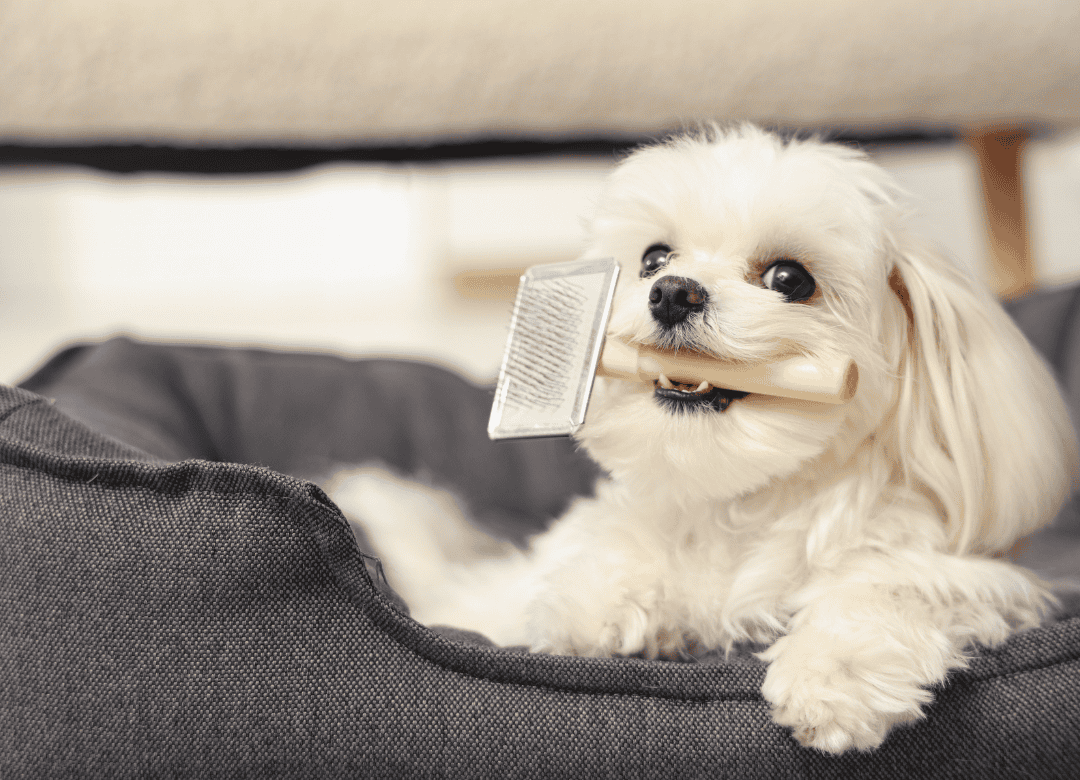
- Brush more often. Daily brushing during peak shedding pulls the loose coat out before it lands on your couch.
- Use the right brush. A deshedding tool or undercoat rake works far better than a standard brush for heavy shedders.
- Bathe and blow-dry. A bath followed by a blow-dry loosens the coat and speeds up the shed. Some groomers offer deshedding treatments specifically during the shedding seasons.
- Vacuum on a schedule, not a reaction. Staying ahead of it feels better than chasing it.
- Keep up with nutrition. A coat in good condition sheds more cleanly. Poor nutrition can make shedding worse, and the coat look dull.
Although Henry is a light shedder, I notice his brush is full during fall brushings. I use a slicker for him year-round with his thick, curly coat.
When to Actually Worry About Shedding
Seasonal shedding is normal. A few signs that something else may be going on:
- Bald patches or thinning in specific spots
- Skin that looks red, irritated, or flaky underneath
- Shedding that is dramatically out of cycle (heavy shedding in mid-winter, for example)
- Shedding paired with other changes like low energy or weight shifts
If you are noticing any of those signs, a vet check is a good idea. Seasonal shedding should not come with more issues.
The Bottom Line on Dog Hair Shedding in Fall

Fall shedding is not a problem.
It is your dog doing exactly what their body is designed to do to prepare for the colder and darker season.
The best thing you can do is brush your pup often. Keep the right tools on hand, and remind yourself that it will settle down once the winter coat arrives.
Don’t worry if your dog leaves tumbleweeds of fur across the whole house every October.
I learned to treat it like a season, not a crisis, with my childhood dogs Tag and Homer.
Fun Dog Fact: There are 11 types of dog coats. Each one has different brushing, grooming, and care needs.