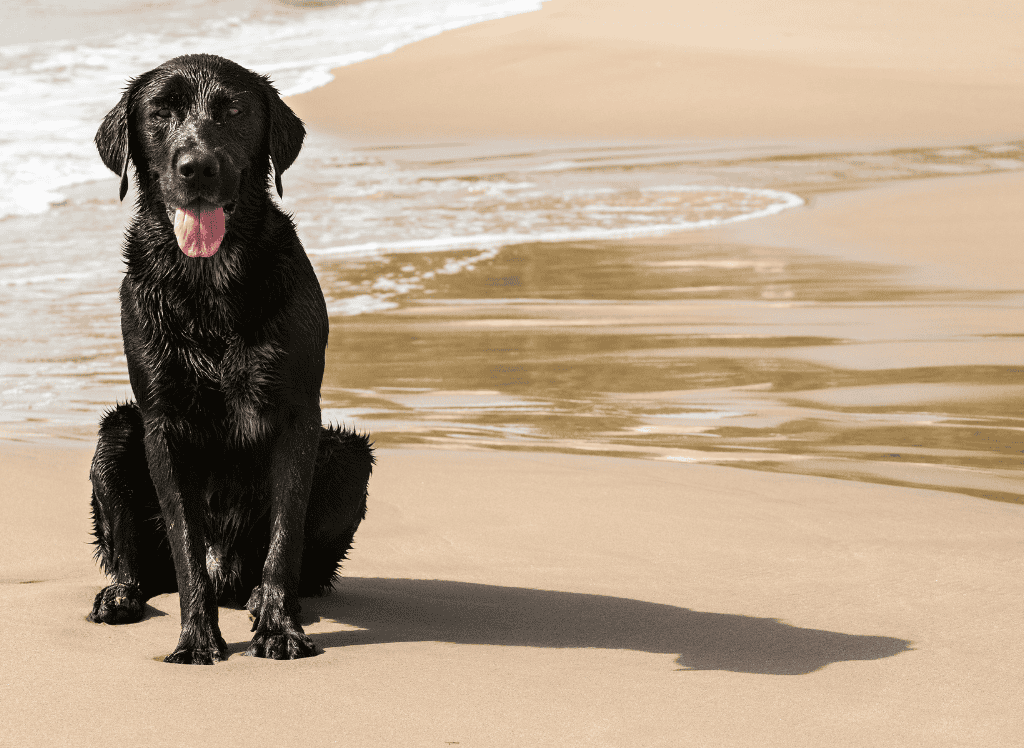
Why are black dogs often the last to be adopted? Where did the old legends come from that warned crossing paths with one brings bad luck? These eerie tales have lingered for centuries.

The reality? Black dogs aren’t ominous. Rather, they’re loving, loyal, and full of personality. My rescue pup, Henry, is proof. He’s goofy, sweet, and about as scary as a marshmallow. It’s time these misunderstood dogs got the love they deserve.
The black dog myth started to take root
The aversion to black dogs is mostly credited to English lore. The term “Black Shuck” was used to describe what they thought was a ghostly dog. According to legend, the Black Shuck dog is supposed to roam the English countryside, have glowing eyes, and bring bad luck in the form of storms and omens. But maybe it was a wolf or a lost muddy lab.
Flash forward to today’s black dog myth

Today, black dogs still have a bad luck stigma. Black Dog Syndrome was coined to describe how black dogs are left in shelters for much longer than their lighter-coated cousins. Some people believe black dogs look scary, are unlucky, or simply won’t photograph well in our selfie era. Silly, isn’t it?
Heck, I’ve even had people ask me why I would adopt a black dog. Ridiculous! I can personally tell you black-coated dogs, including my Henry, are sweet, loving, goofy, and no different from light colored pups.
Time to change the black dog myth
It’s time to finally flip the black dog myths. Consider adopting or fostering a black pup. Doggie cuddles are lucky regardless of the colored pup giving them.
Fun black dog myth fact: Have you heard the term “a black dog?” Winston Churchill used this phrase to describe his depression. Today, some mental health campaigns use the term to bring awareness and hope to depression.