


Last updated on September 30th, 2026 at 12:08 am
Dogs don’t just need physical exercise. They need mental workouts, too.
In fact, just 10–15 minutes of mind games for dogs can tire them out as much as a long walk (yes, really). It helps my dog, Henry.
If your dog is:
- Getting into trouble
- Acting bored or destructive
- Barking more than usual
Then it might not be a behavior problem, but rather it could be that your dog has a bored brain problem.
I’m happy to tell you that you don’t need fancy toys or hours of training to solve the issue.
In this article, you’ll find:
- Easy mind games you can start today
- DIY options (budget-friendly!)
- Ways to mentally tire your dog out fast
Let’s turn that chaos into calm
📌 PIN FOR LATER!

Budget tip:

A great aspect of dogs is that they don’t need extra things to be engaged. You can create it easily. As such, even if your dog doesn’t like toys, you can still stimulate your dog’s mind daily. I’ve learned how to do it for Henry. Honestly, it’s rather easy and it’s free. That’s a huge win-win for Henry and for my pocketbook! What could be better?
Want more ways to avoid the hidden costs of being a dog parent? This guide shows you how to prevent these costs easily.
Why Mind Games for Dogs Are So Important
Dogs need mental stimulation just as much as physical exercise. Without it, they often develop behaviors like chewing, barking, and digging out of boredom.
What are the benefits of using mind games for dogs?
You might be surprised by all the benefits that simple mental stimulation for your dog can provide. They include:
- Confidence boost
- Decline in negative behaviors (such as barking, digging, chewing, and jumping)
- Reduce anxiety and stress
- Increase cognitive functions, especially important for the senior dog
- Balance overly energetic dogs
- Decrease depression
- Give dogs a job
- Increases mental stamina (much like aerobic exercise)
- Helps to provide a healthy, calm outlet for growing puppies
- Decreases boredom, especially when housebound or recovering from surgery
- Encourages picky eaters to eat
- Prevents destructive behavior
- Strengthens your bond with your furry buddy
Honestly, Henry often won’t eat without playing a brain game.
Note: If your dog loves toys, you can purchase a mental stimulation dog toy like a dog puzzle toy.
Does your dog hate dog toys? In this article, I share how your dog really wants to play.
Easy Mind Games for Dogs You Can Start Today
There are a multitude of dog stimulation games available on the market. Additionally, there are various dog mental stimulation toys. However, if your dog is like Henry and refuses to play with toys, then you need to get a bit clever with your mind games. Every dog seems to love them equally well, which is a huge bonus!
Want a fun way to celebrate the holiday with your dog? This fun and funny ebook might be your new holiday classic.
1. Scavenger Hunt (Scent Game for Dogs)
Admittedly, Henry loves this game. I swear he’s part bloodhound. Honestly, besides a basset hound or beagle, I’ve never seen a dog lead by his nose as much. In short, this game is very easy.
Dogs have 300 million scent receptors, which makes sniff games one of the best mental workouts.
Best for:
- High-energy dogs
- All age dogs
- Blind dogs
What you need:
- Dog food (yep, like I said, this is mealtime)
- Multiple small plates or bowls (optional)
Actually, I usually just hide his food without a plate or bowl. I have wood floors and Henry’s pretty quick. But this also depends on the type of food you feed.
How to play:
Hide the food throughout the house (or in one specific room, which is what I generally do). Remember, under and behind chairs and tables is great to challenge your dog.
Remember, don’t let your dog see where you hide the goodies.
Thus, when the food is discovered, it becomes a found or hidden treat!
Finally, let your dog enter the room and have a go at sniffing out the food treats. Henry gets such joy out of finding bits and pieces here and there. It’s almost like a kid at Christmas.
Bonus: I’ve even placed some food in Henry’s bed, which always thrills him!
Why it works:
It engages your dog’s strong scent skills and strengthens cognitive abilities.
2. Catch the Food Game
Without a doubt, this is Henry’s favorite mealtime brain game. It’s super simple! The best part is that Henry gets to be active and search for his food a bit. Besides, he loves it when he finds his treasures of food.
Best for:
- High-energy dogs
- Puppies
- Adult dogs
What you need:
- Dog food (simple, right?)
How to play:
Also, you’ll want to play in a room or space with flooring that can handle food being thrown. Thus, you probably will want to avoid a carpeted room. As I mentioned, my floors are wood and work well for this game. Although, you could go outside if you have a clean patio free of chemicals, ants, and other harmful products and items.
In short, what I do for Henry is throw a few pieces of food out to him. I try to get the food to places where he’ll have to work to get to it such as under a chair or behind a table. As a result, it makes it extra fun for him and more stimulating and challenging as well.

Why it works:
It engages your dog’s brain and sight skills at a time when they are looking for something yummy to eat.
Boost your dog’s health simply with this free guide. You and your dog will appreciate these tips.
3. Which Hand Game
This is kind of a combo of games. Or, at least it is the way I play it with Henry.
Best for:
- Food-motivated dogs
- All ages
- All abilities
What you need:
- Dog food (I know, easy, yet effective).
How to play:
First, have your dog sit or at least get your dog’s attention.
Then grab some food, place it in one of your hands, and then close both hands.
Show your dog both hands closed and say “Chose” or “Which hand”.
When your dog touches the hand with the food, give him/ her the food.
Then throw some more food out for an additional brain game engagement activity. Remember to try to get the food to challenging locations such as under tables.
Once the thrown food has been eaten call your dog back and repeat.
Why it works:
It helps to increase your bond with your dog while engaging your mental skills.
4. Shell Game for Dogs
This is a fun game that your dog will love and add mental stimulation no matter if your dog is a puppy, an older dog, or anywhere in between.
Best for:
- Food-motivated dogs
- Blind dogs
- All ages
- High-energy dogs
What you need:
- Dog food
- At least 3 cups or a cover for the food
How to play:
To play, simply have your dog sit and watch you.
First, show your dog the food and the cups.
Next, place the food under one cup with at least two others turned over with nothing under them.
Move all three cups slowly around.
Stop and let your dog discover which cup has the hidden food treats.
NOTE: If your dog loses interest, then introduce a high-value dog treat. Once your dog is back in the game, then rotate back to dog food. Remember this is a mealtime brain game.
Looking for a fun holiday activity? Try this simple Easter egg hunt game for dogs.
Why it works:
It engages your dog’s mind while building trust and strengthening your bond.
5. Training Games for Mental Stimulation
Honestly, Henry loves any chance he gets to train or learn a new trick. I’m the same way. We’re both learning nerds.
Best for:
- High-energy dogs
- All age dogs
- All abilities (there’s no restriction on learning)
What you need:
- Dog food (optional high-value dog treats if teaching a difficult trick)
- Leash
- Training aids (optional)
How to play:
This is a super-easy idea. Instead of using dog treats as rewards for training, you use your dog’s food. Thus, this is best done at mealtime. Keep in mind that your dog may not be able to train for the entire bowl full of food.
You may want to combine this method with a scavenger hunt or throwing food mind games. Moreover, you could even set up an obstacle course and reward your dog each time he/she accomplishes a new task within the course. An obstacle course provides even more mental exercise for your dog.
Why it works:
Training engages your dog’s brain as they learn a new behavior. But it also helps to build trust and increase your bond with your dog.
6. Muffin Tin Puzzle (DIY Dog Brain Game)
This is a cheap mental stimulation DIY toy your dog will love!
Best for:
- Food-motivated dogs
- Toy-motivated dogs
- High-energy dogs
What you need:
- Food or high-scent treats
- Muffin tin tray
- Tennis balls (6 if your tin has 6 muffin spots)
How to play:
Place your high-scent cookies or food in various pockets of your muffin tin. You don’t need to put treats in every muffin hole. Then cover each muffin tin hole with a tennis ball. Place the tin on the floor and let your dog sniff, remove the tennis balls, and discover the treats.
Why it works:
It’s simple, free, and engages your dog’s mind in a fun way. It takes no time to put together and your dog is happy.
7. Towel Roll Game
This is another cheap dog enrichment activity your dog will love! Heck, who doesn’t love DIY dog games when their pup and wallet are happy?
Best for:
- Food-motivated dogs
- High-energy dogs
What you need:
- High scent cookies
- Towel
How to play:
Lay out the towel flat and spread treats over it. Then roll it up. Place it on the floor and let your dog unroll the towel to discover the treats.
Find out more fun indoor games for dogs that your dog will wag his tail for in this article.
Why it works:
It takes seconds to put together and engages your dog’s mind as well as any store-bought mental game.
How Often Should You Play Mind Games with Your Dog?
Roughly, your dog should have 10-20 minutes of mental stimulation a day. But you can check out this free calculator to find out how much your dog needs daily.
The times that may help most are:
- Morning, which helps to burn energy to start the day
- Evening, which can be a calming activity to wind down the day
Common Mistakes with Dog Brain Games
Like with anything, mistakes can happen with dog mind games. These include:
- Making it too hard too fast
- Not supervising DIY games
- Repeating the same game daily (dogs get bored!)
- Only using food-based games
Can Mind Games for Dogs Save You Money?
In short, yes! I really do love the numbers part. It always brings everything home. As such, consider the following costs:
| Separation anxiety | $200-1500 |
| Dementia | $300-500 |
| Depression | $300-800 |
| Dog behaviorist | $50-200 (per session) |
Related Dog Care Tips You’ll Love:
- 19 Fun Indoor Activities for Dogs
- Create Your Pup’s Favorite Dog Treats With This Free Tool
- Dog Trainer vs Behaviorist: Who Will Unlock My Dog’s True Potential?
- How Can I Turn a Bored Dog Into a Happy Dog for Pennies?
- Easy Dog Yard Digging Solutions
- 25 Effective Ways to Stop Your Dog Digging The Furniture
- This Is How A Dog Who Doesn’t Like Toys Plays!
- Hidden Dog Expenses: Why Good Dog Parents Spend More Than They Expect
FAQs About Mind Games for Dogs
Do brain games really tire dogs out?
Yes! Mental work can be as tiring as physical exercise. Think how tired you get when you’ve been working on a technical issue. It’s the same sort of thing with your dog.
What are the best mind games for high-energy dogs?
Usually, any kind of mind game involving scent work, puzzle toys, or obstacle courses is great for high-energy dogs.
Can I do mind games without toys?
Absolutely! Household items work fine, and that’s what I generally use for Henry.
How do I know if my dog is mentally tired?
You’ll notice your dog settle down, nap, or stop seeking attention or wanting to play the mind game.
What are the easiest mind games for dogs at home?
Simple games like the towel roll, muffin tin puzzle, and which hand game are great beginner-friendly options that require little to no supplies.
Final Thoughts on Mind Games for Dogs
📌 PIN FOR LATER!
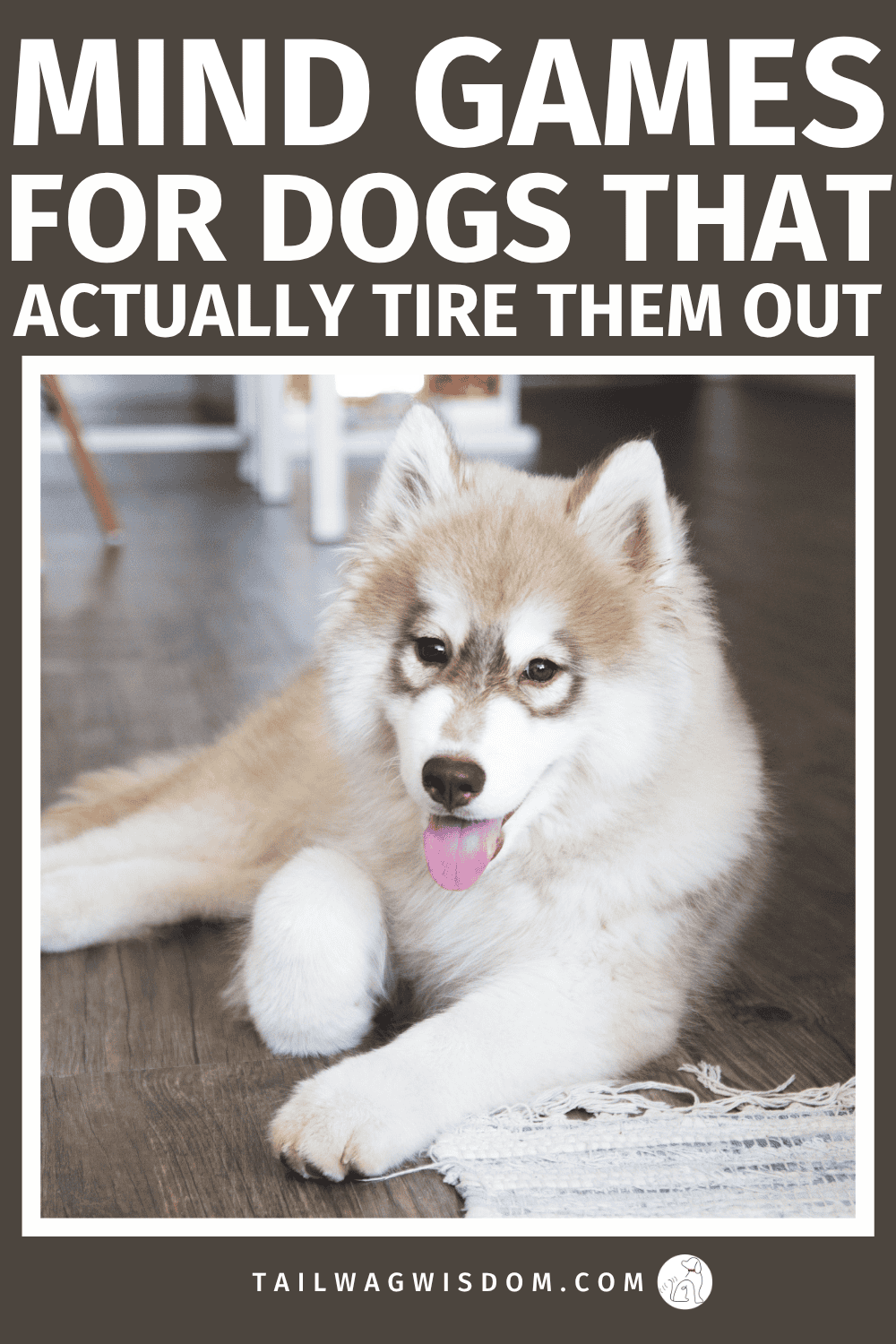
You might think that if your dog refuses to play with toys, you can’t stimulate his mind. Conversely, it’s actually very easy to provide your dog with “brain exercise”.
Heck, we exercise their bodies, so why not their minds? You can do it for free and in association with mealtime. Henry loves his mealtime dog brain games.
It keeps his mind engaged. It also encourages him to eat his entire meal, which is a bonus. I couldn’t be more thrilled with these stimulating games for my furry friend. I think Henry loves them too!


I love Henry’s eager face. He looks SO ready for a snack and some games doesn’t he? 🙂
Mental stimulation is not just a human thing is it? Dogs and cats need it to keep them happy i their homes and lively. I love hide and seek with Henry it made me LOL! I can imagine the fun and games.
Yes, Henry does LOVE mealtime brain games. I can’t say I’d want to work so hard for my meal. LOL But our furry friends are fun that way in the games they like to play. I’m certain you’d be able to take lots of great action photos of him working for his meals. It is fun to watch and boy he does enjoy it!
Thank you for your kind comment and continued support! I really appreciate it!
Fantastic ideas and since Layla has gone blind it has worried me that is why I bought her different snuffle toys as they keep her busy part of the day and to keep her brain working I take her to different parks as the new smells keeps her active wandering around sniffing and not getting injured
A snuffle toy is a terrific way to engage Layla’s mind, especially with her being blind. I love that idea! I tried different toys that Henry had to work to get through have a treat and he just wasn’t even vaguely interested. The only thing that has worked for him are interactive mealtime games. He loves those. But when your pup hates toys, you have to get creative.
Thank you for sharing your experiences with brain games with Layla. It sounds like her brain is very active. That’s great! Thanks also for your continued support! I greatly appreciate it!
Interesting read. You often hear of mental stimulation for humans but never for animals. It’s nice to know that practicing different types of “brain ” games for dogs has so many cognitive benefits. I’ll definitely pin and share this post for other dog parents to try. Thanks for sharing this insightful post.
Yes, an inactive brain, regardless in humans, cats, dogs, or anything else, can be harmful. Thus, the essential need to engage the brain with different activities and for Henry that would be a mealtime brain game. I’m glad I discovered these since he really does hate dog toys, even the mental stimulation ones. Sometimes you have to be more clever than your furry friend. LOL
Thank you for the kind words and your continued support! I greatly appreciate it!
Ooooo, we loved mind games here! They were so much fun, and my FiveSibes loved them from puppyhood to their senior days! Shell games was always fun. I always thought I’d fool them. Ha! Silly me! So many hours of great fun with them. I love that you show the budget, too! (I always do!) because as you said, it helps with anxiety and depression. My Wolf had bouts of severe anxiety always, and when he was the “lone wolf” remaining in our pack family, he also had depression, but when I would pull out his fave puzzle, it was like a light switch…he instantly went into fun and hunt mode! (very food-motivated pups!) I even kept one of his favorite hide-n-seek puzzles. <3 Henry looks like he is enjoying himself, too! Just look at that tongue, he is ready for some yummy fun! Sharing this, of course!
Awe, I bet brain games helped Wolfie. It really is fascinating to watch the light go on and the fun begin. Sounds like you enjoyed playing brain games as much as I do with Henry. I always giggle with Henry. Thank you for sharing your experiences with Wolfie. I love reading it. I’m very grateful for your continued support! Thanks!
Icy is 14 now and stopped being interested in toys about 2 years ago, which saddens me. It was so fun. But she really Loves puzzle toys! I have several at various levels and it really works her brain to get the food or treats out of them. She still enjoys Go Find too sometimes.
That’s interesting that Icy lost her desire to play with toys at age 12. That would’ve sadden me as well. I know she gets to experience a lot of fun adventures that I see she really loves! I’m glad she is enjoying puzzle toys. Those can be very fun. Maybe she has left the toys for Jessie? So curious about her dropping the desire to play as she aged. I just haven’t heard that one much, but I’m certain she has a very good reason. She’s very smart! Thank you for sharing your experiences. I greatly appreciate it!